SECTION 10. SPECIAL RIDING SITUATIONSSQ
There are tactics you can use to handle special situations. You must have a mental strategy as well as physical skills to respond to the assortment of variables.
ROAD SURFACES
Rain-slick surface: The surface is most slick during the first few minutes of rain because oil and dirt mix with the water.
Worn pavement: Depressions can form in areas of heavy traffic. Deep ruts or pavement separation can make handling your motorcycle difficult and may even cause damage if you hit them hard.
Loose surfaces and debris: Be aware of sand, gravel, rocks, and trash.
Crack sealant and tar strips: These can be slick, especially in wet or hot weather.
Ice or snow patches and mud, moss, and algae: These areas can be very slick. Identify them early and reduce speed. 138When crossing slick patches, you may want to keep the clutch lever squeezed and avoid leaning.
Crowned and off-camber roads: A crowned road is higher in the middle than the sides to drain water. Use caution in left-hand curves because ground clearance may be affected.
Bumps, cracks, and railroad tracks: These are like obstacles, so cross them at close to a 90-degree angle. Keep speed under control and maintain momentum. Rise off the seat and keep your weight evenly distributed.
WIND Strong, steady winds and gusty winds can affect your path. The force of a side wind can cause you to move within your lane or even out of your lane. Gusty winds often occur in open areas or mountains. 152As needed, adjust your path by pressing on the appropriate handgrip.
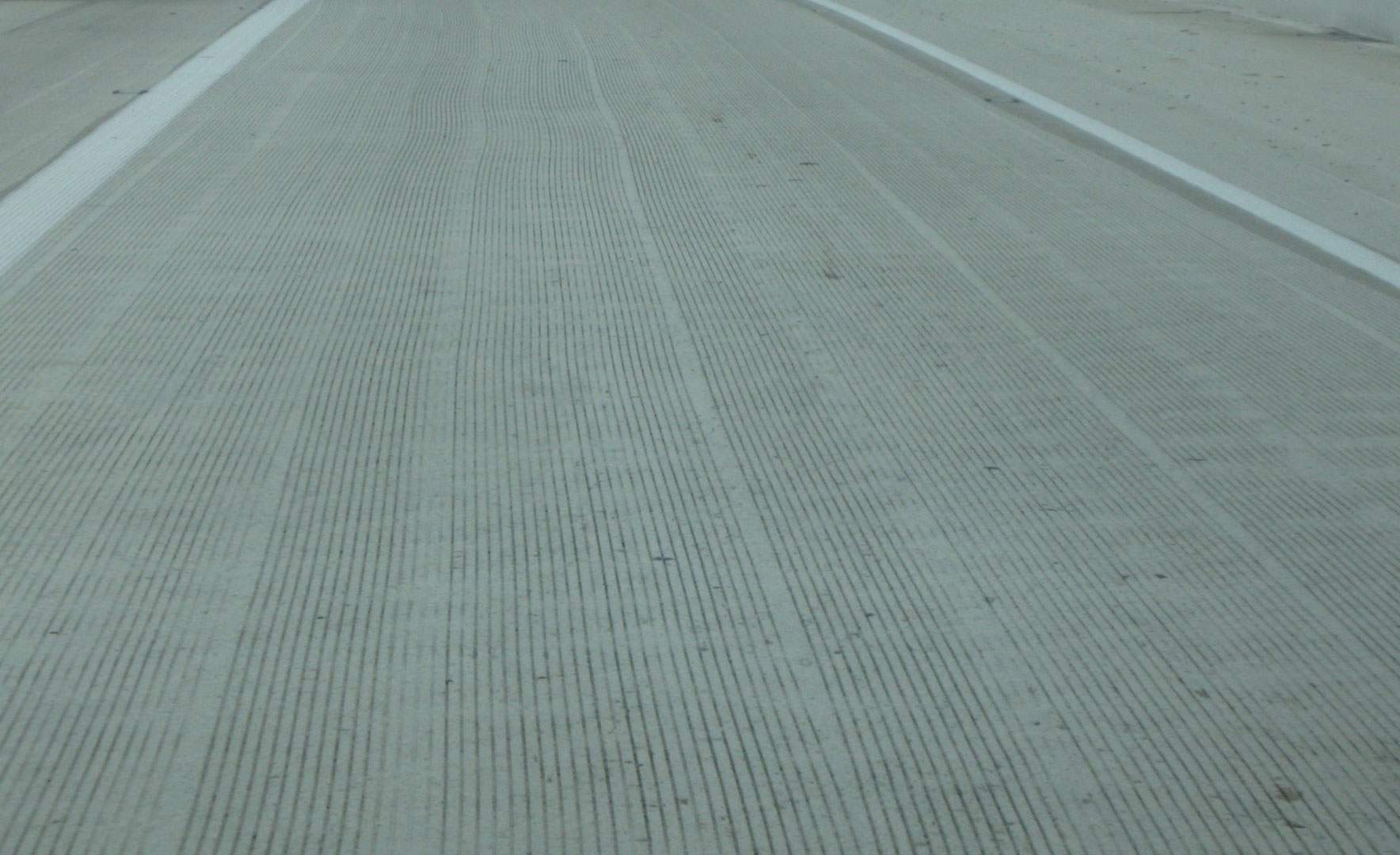
ROAD SURFACES
135Rain-slick surface: The surface is most slick during the first few minutes of rain because oil and dirt mix with the water. It may be best to stop in a safe area and wait out the situation.
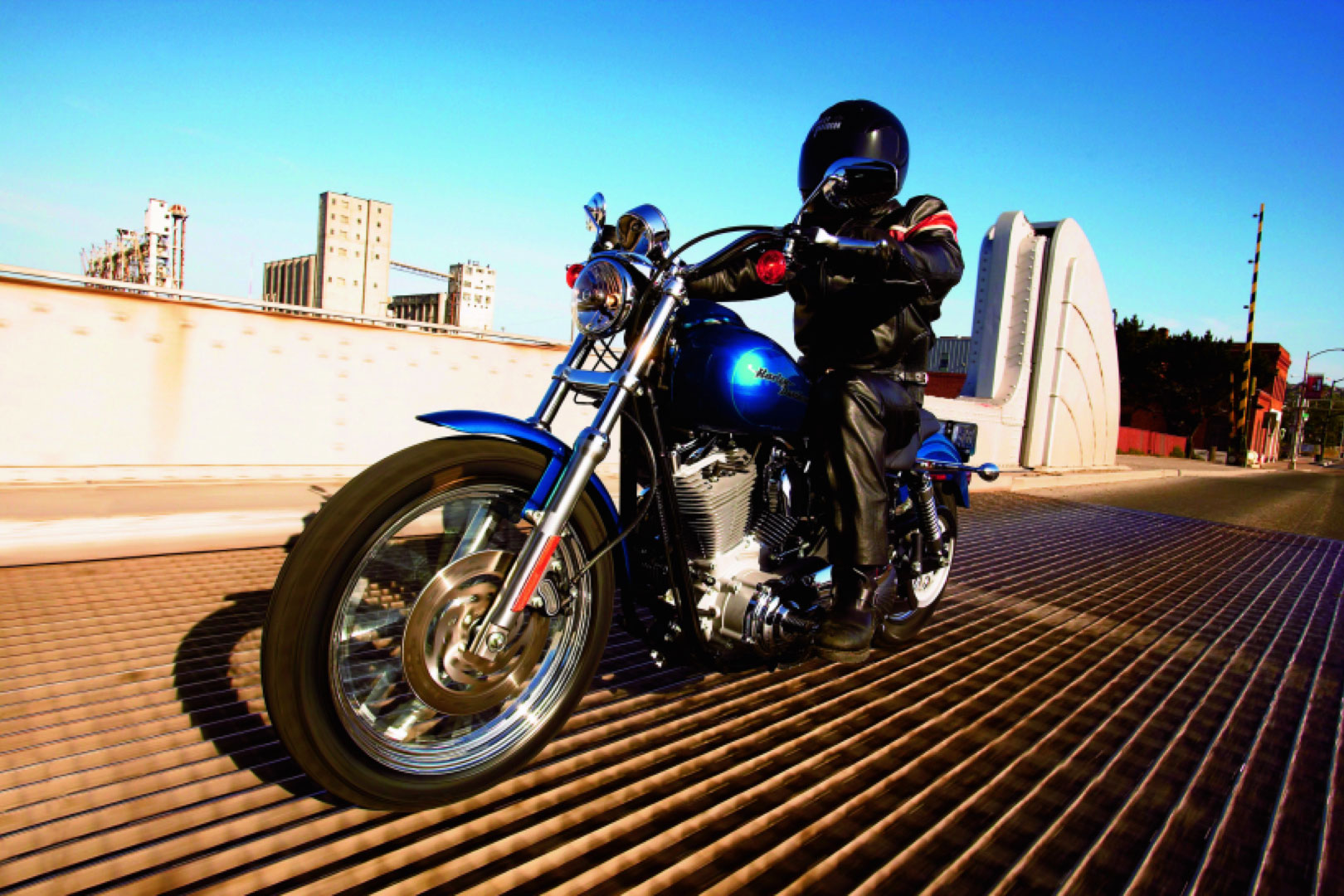
ROAD SURFACES
Rain grooves and grated bridge decks: These cause the tires to feel loose, but they pose no serious threat. Keep steering relaxed and avoid quick actions.
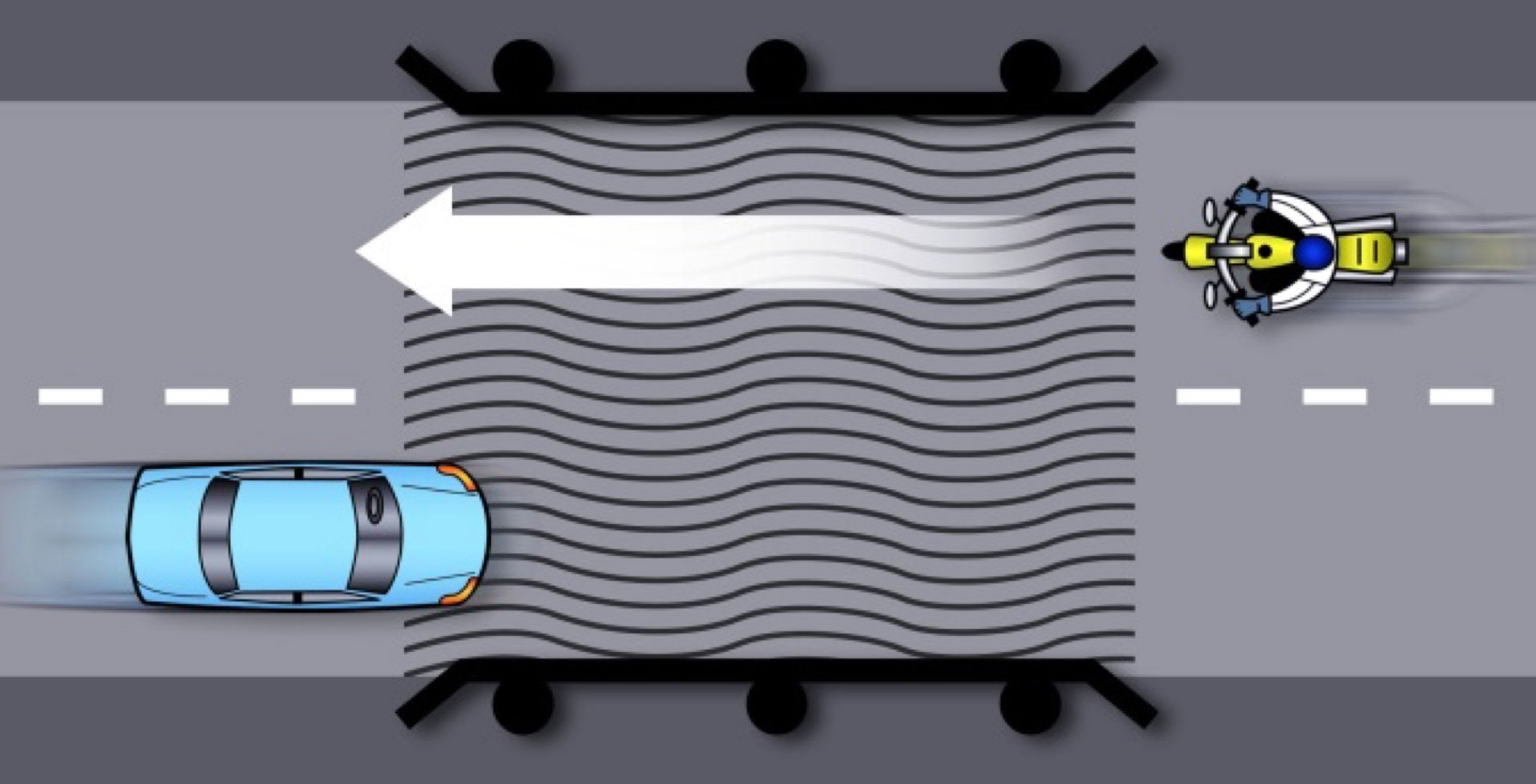
Slow before, ride straight across
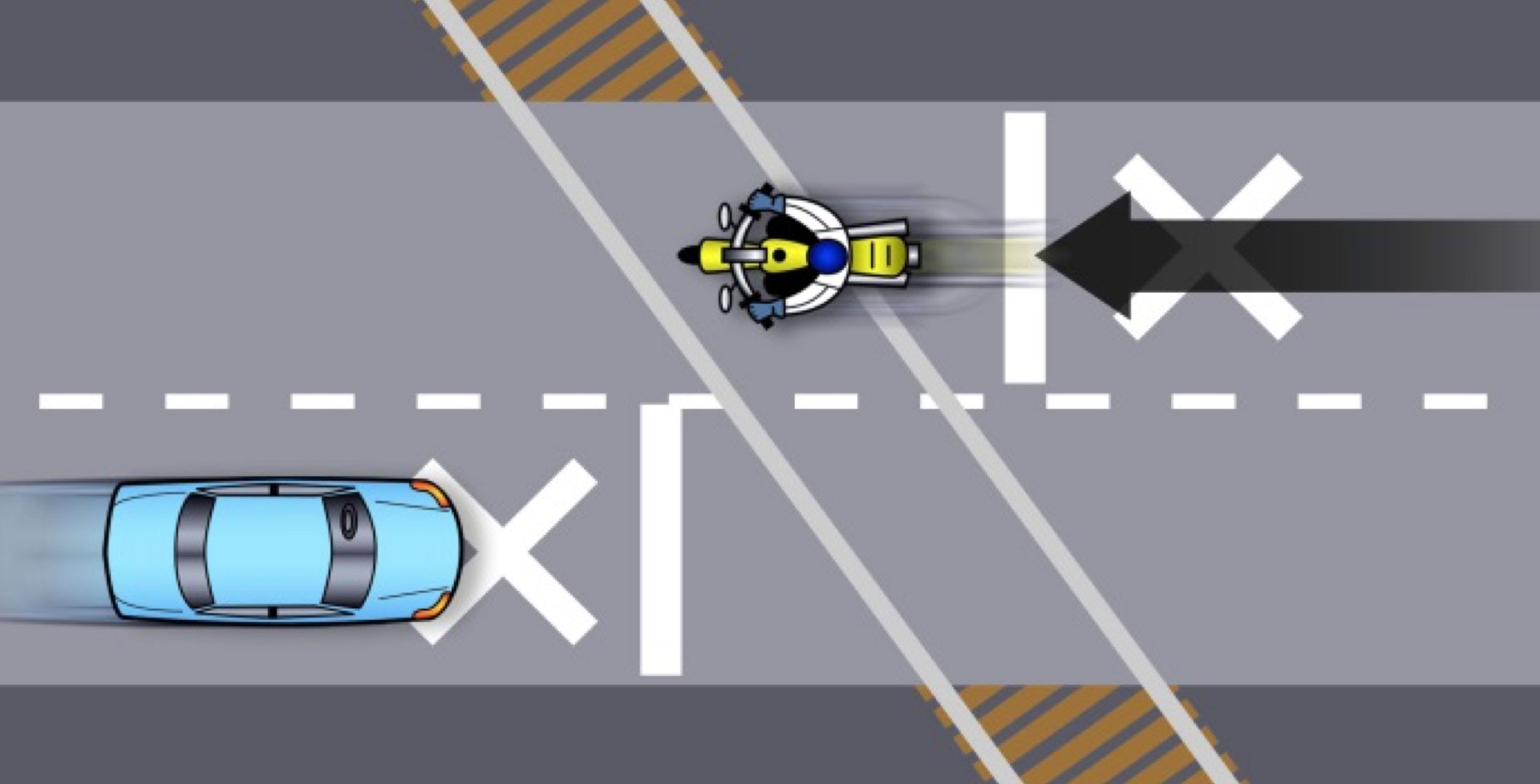
Bumps, cracks, and railroad tracks
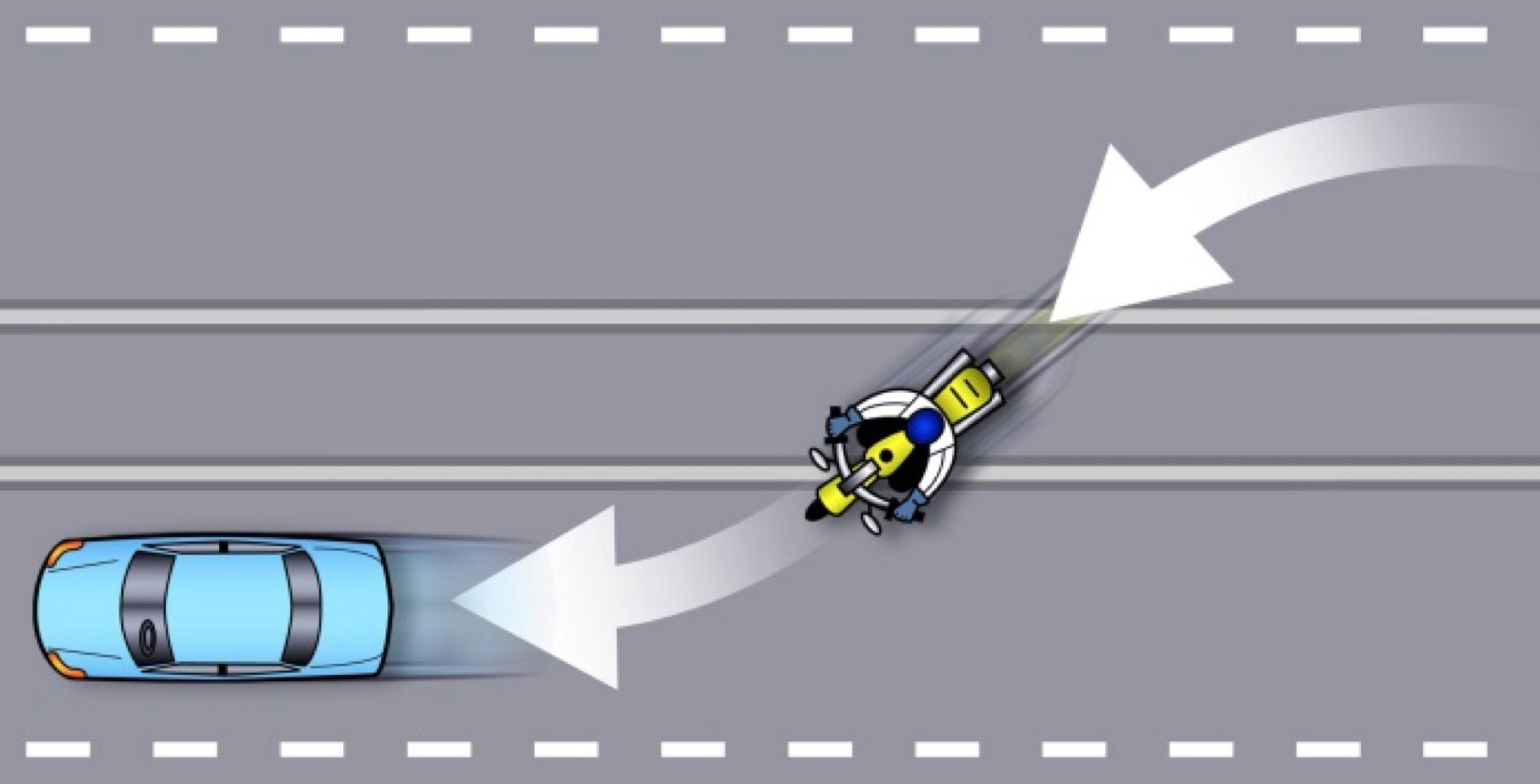
Bumps, cracks, and railroad tracks
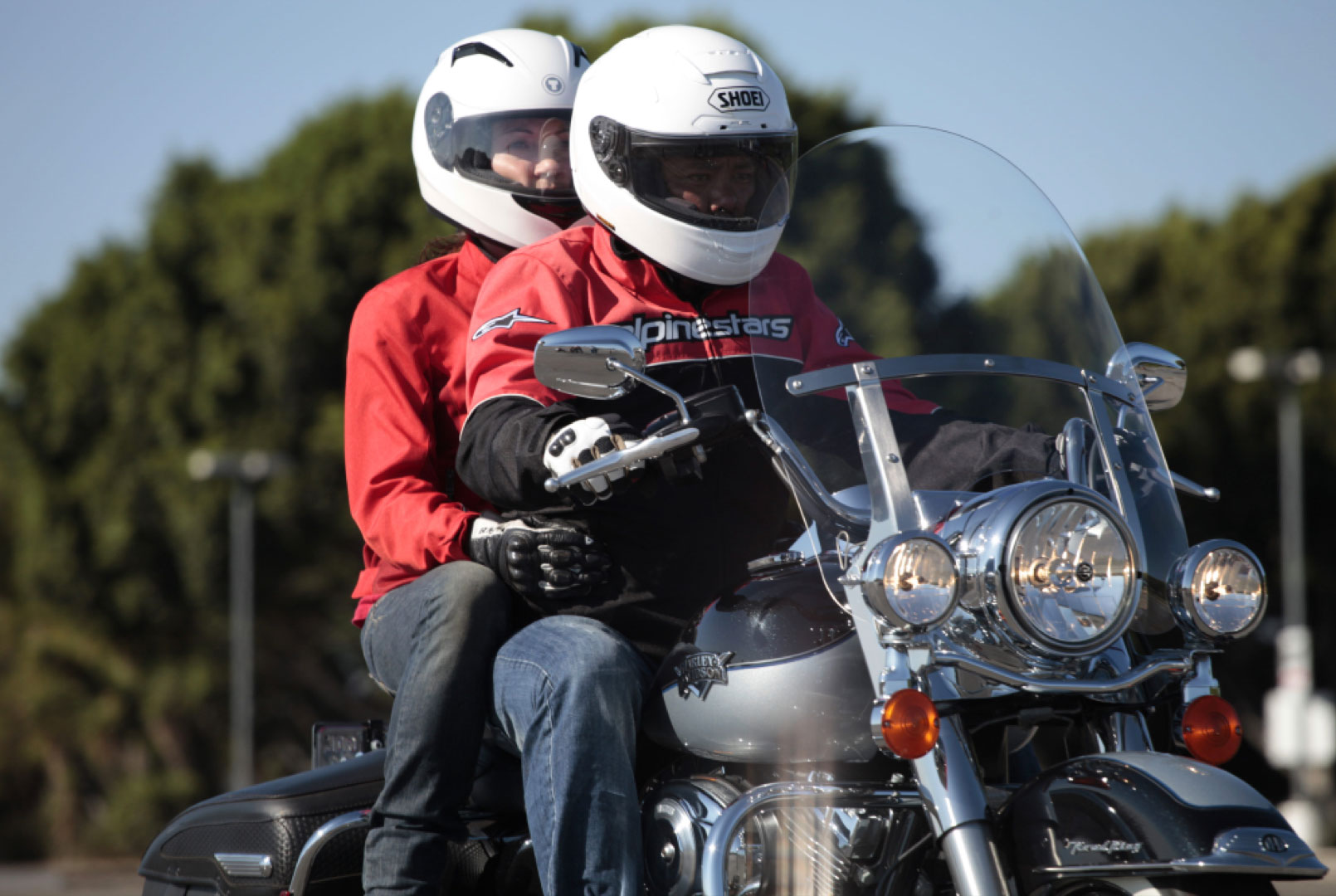
CARRYING PASSENGERS OR CARGO
You should be a skilled rider before you carry a passenger or cargo because it affects the way your motorcycle handles. 141Starting from a stop may be more difficult, and it may take longer to get up to speed. More time may be needed for passing. More brake pressure may be needed for stopping. See the owner’s manual for proper suspension settings and tire pressure.
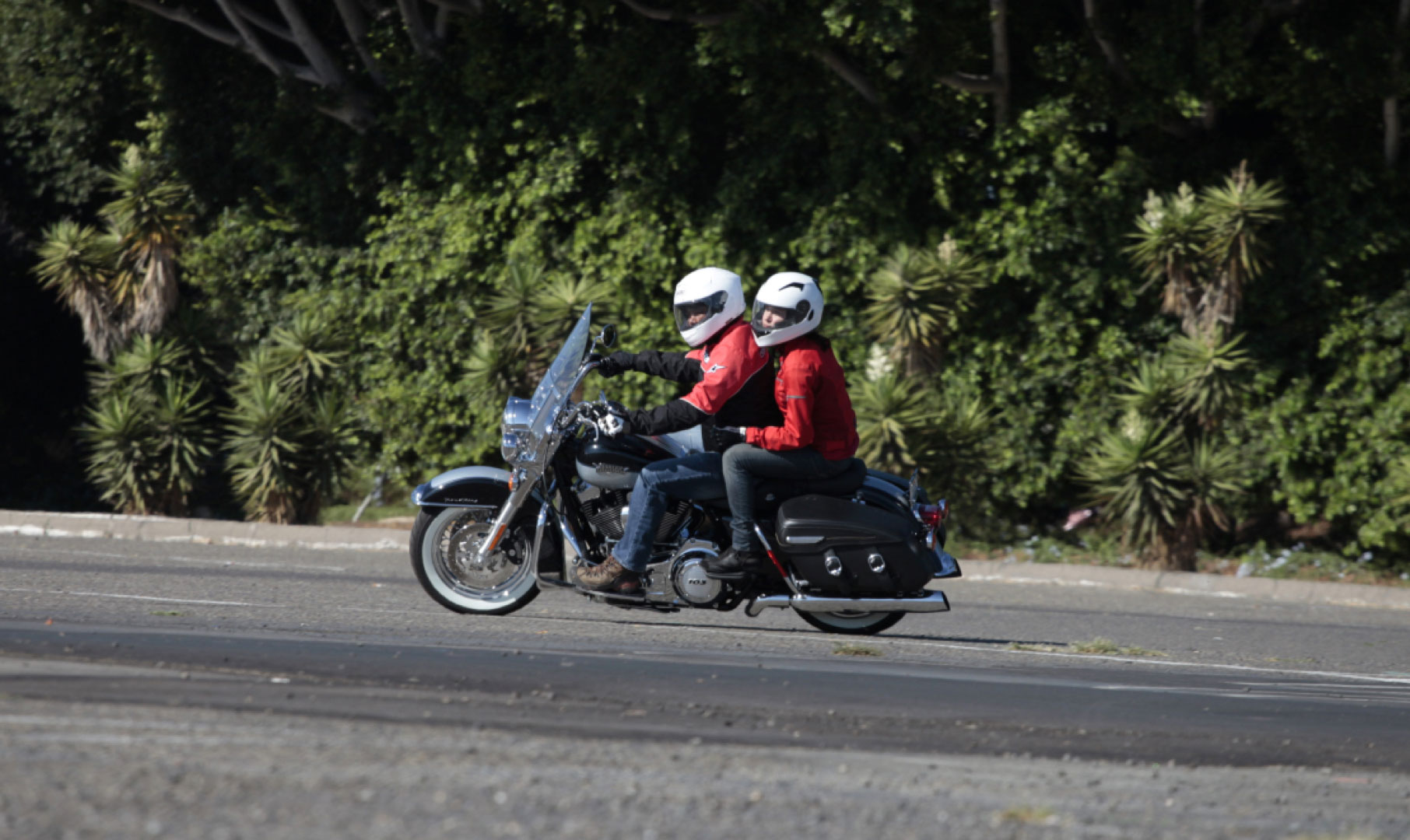
CARRYING PASSENGERS
In turns and curves, look over your shoulder in the direction of the turn or curve.
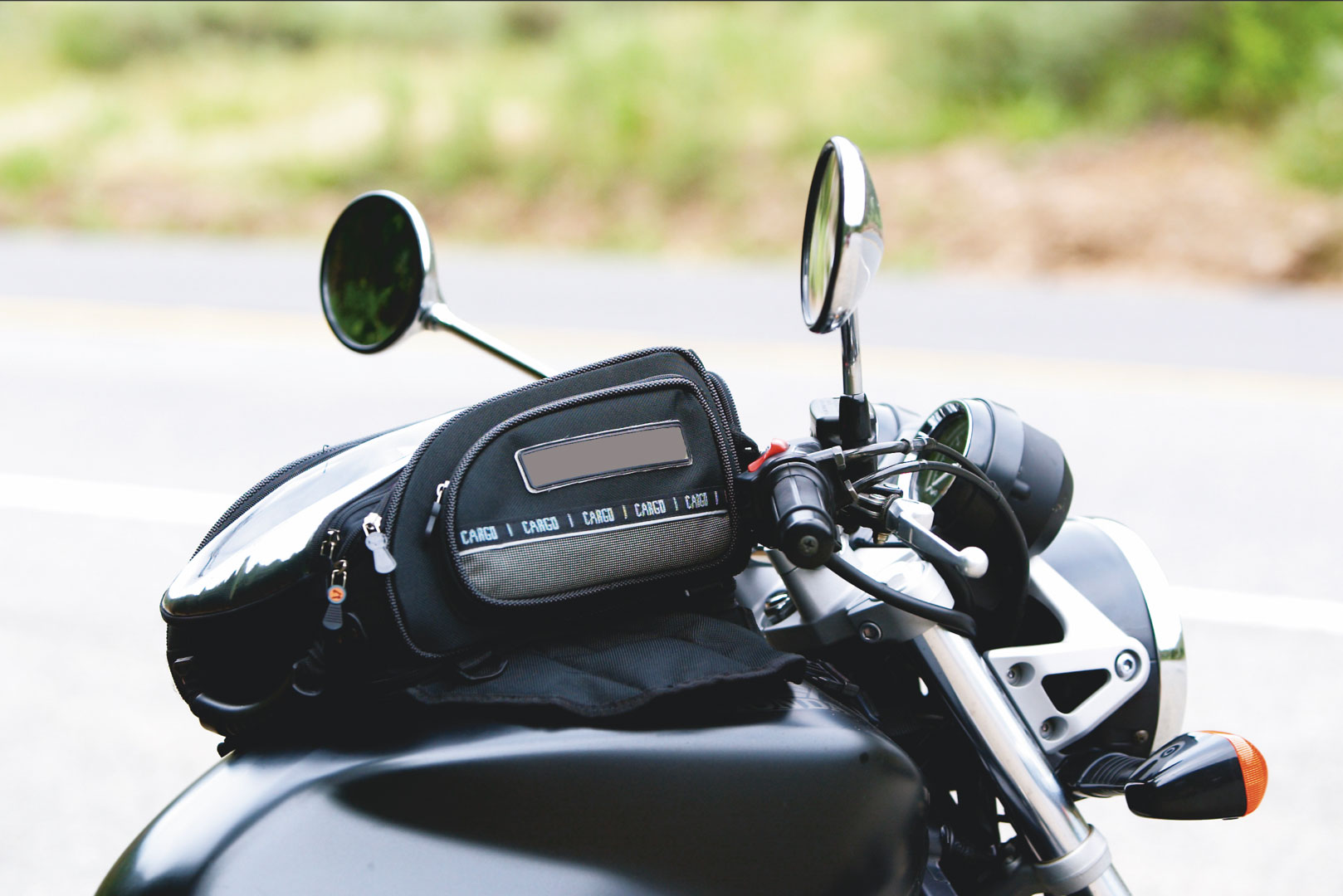
CARRYING CARGO
Tank bags are a good way to carry extra cargo. They keep weight centered. If you use a tank bag, be sure it does not interfere with handlebar movement.
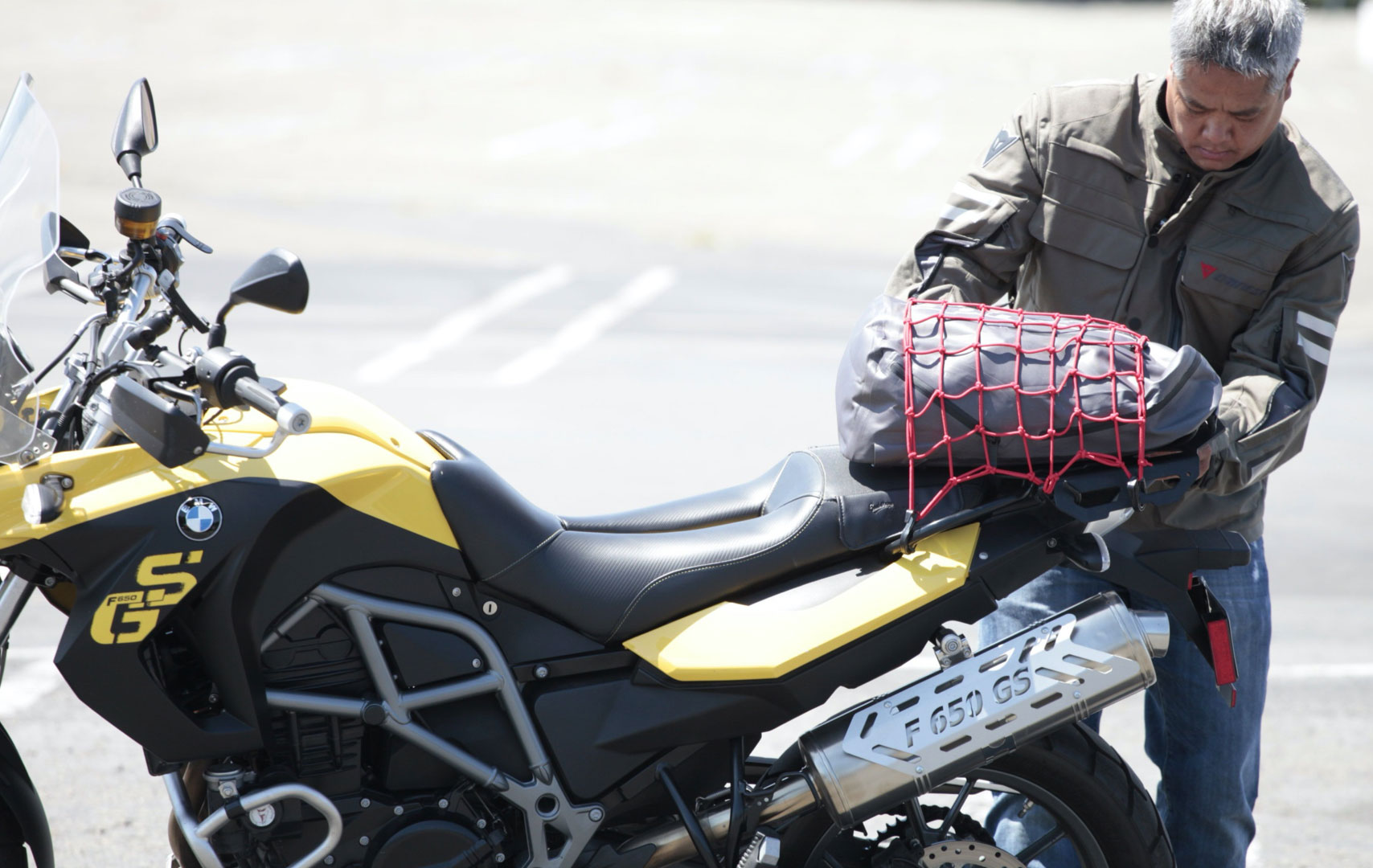
CARRYING CARGO
Do not block lights or moving parts, and keep items away from mufflers. Be sure the cargo is secure. Use web straps, bungee cords, cargo nets, or similar fasteners. If you use bungee cords or elastic nets, be sure the ends are secure and that a stretched cord does not snap back and injure you.
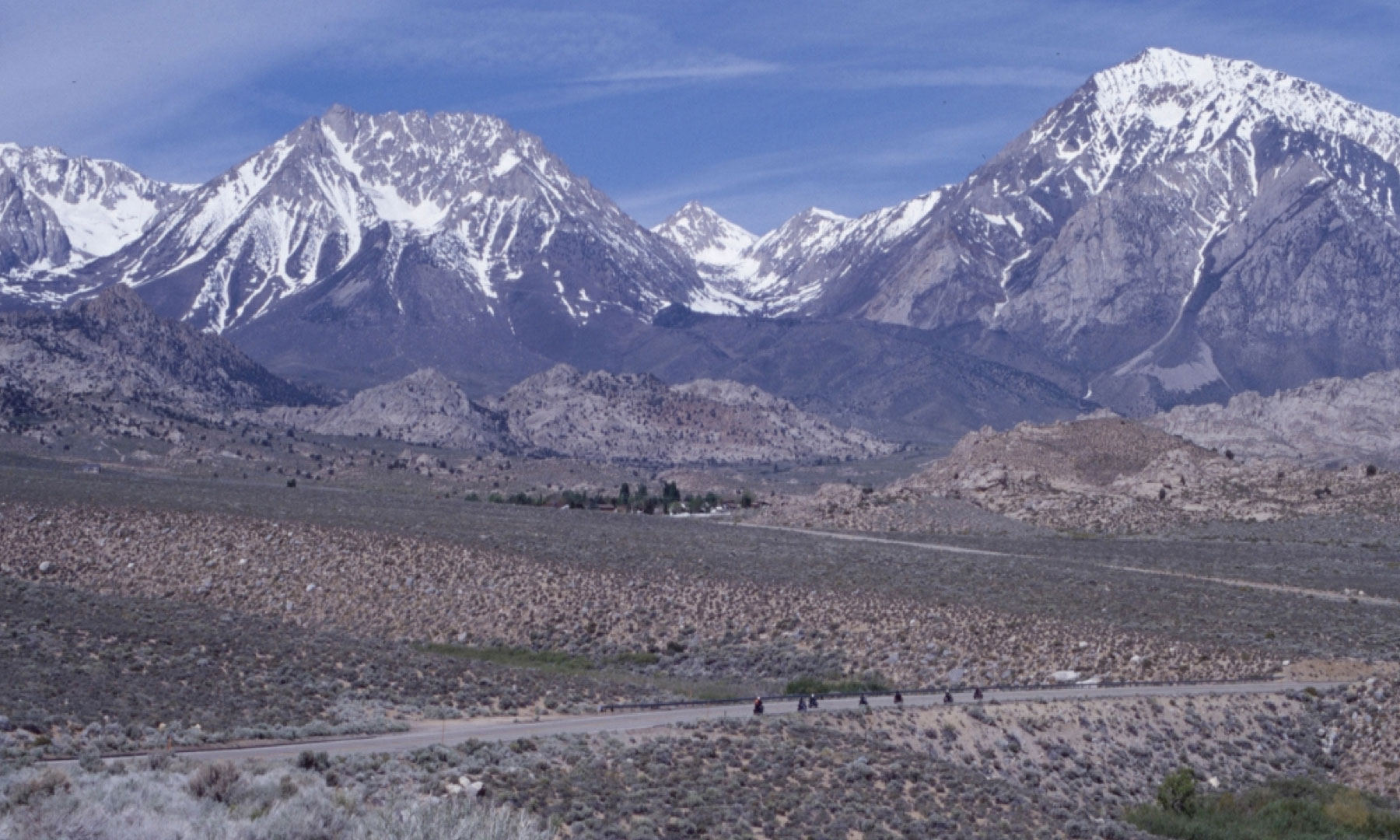
TOURING
Proper planning is a must. 148Consider potential weather conditions, and make plenty of stops to avoid fatigue and maintain nutritional needs. Carry the proper clothing so you can dress in layers as needed, and have enough tools to make repairs if trouble arises.
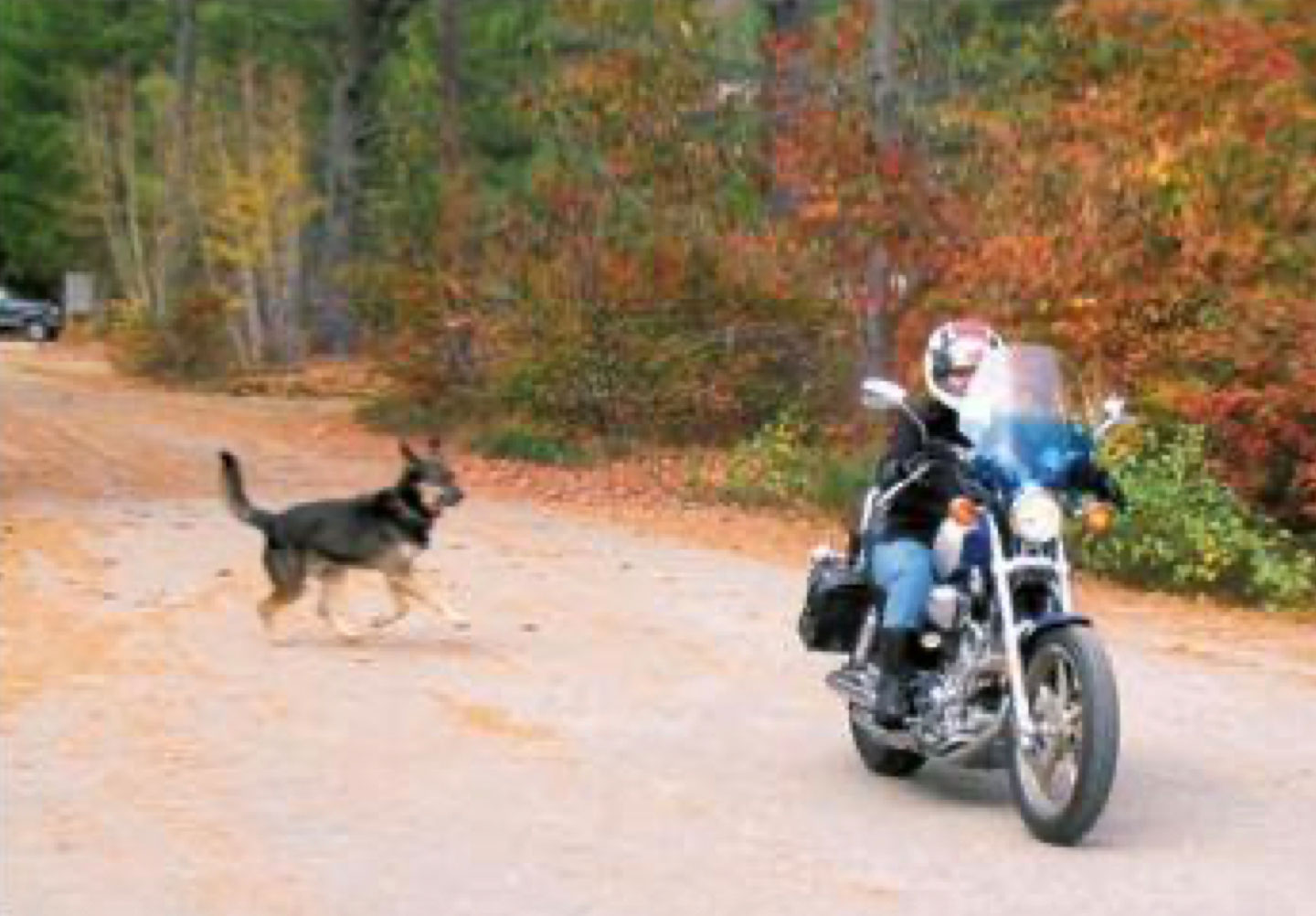
ANIMALS
Dogs like to chase cars and motorcycles. 153A good response is to slow, downshift, then accelerate past the dog. Do not kick at the dog as that may upset your balance.
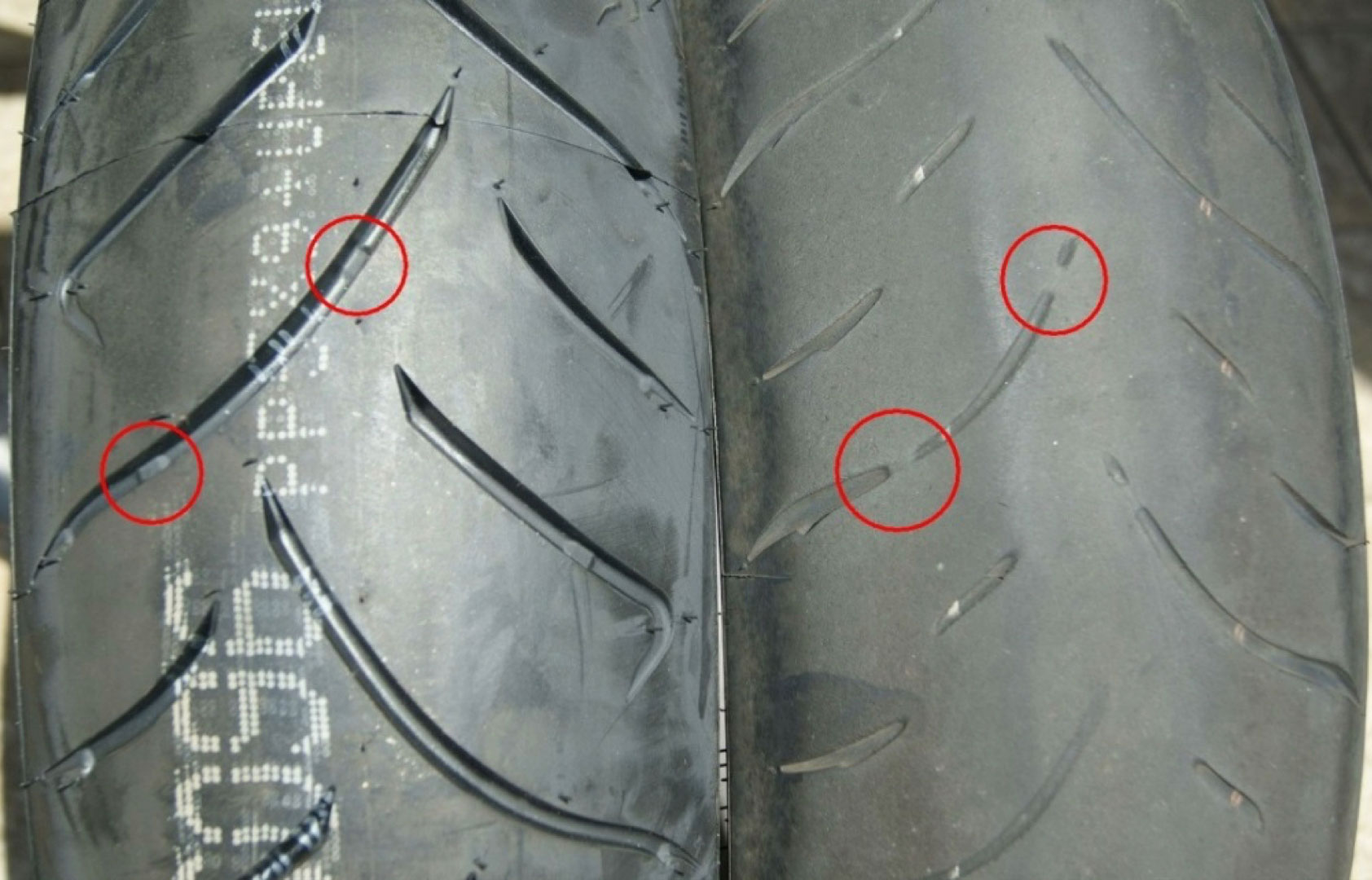
MAINTENANCE AND EMERGENCY ISSUES
154Tire Failure, Stuck Throttle, Clutch Cable Failure, Weave or Wobble, Drivetrain Problems, Engine Seizure