SECTION 9. BASICS FOR EMERGENCIESSQ
It is better to respond early to a situation than to react at the last second in an emergency. We live in an imperfect world and people make mistakes. While avoiding an emergency situation in the first place is a goal, it is also a wise idea to have good crash-avoidance skills in case you need them.
EMERGENCY STOP IN A STRAIGHT LINE
126The best way to achieve the shortest braking distance is to use the controls in a way that produces maximum braking pressure at the front and rear brakes simultaneously without skidding either wheel. Making an emergency stop is an important skill. Practice often in a safe area. Keep your body centered and look ahead. Squeeze your legs against the gas tank to keep from sliding forward on the seat.
EMERGENCY STOP IN A CURVE
Making an emergency stop in a curve requires effective use of available traction for both leaning and braking. 128Some traction is used for cornering, so you should generally use less brake pressure in a curve than when braking in a straight line. Basically, you have two choices. 129One is to straighten up first and make a quick stop in a straight line.The other is to apply some brake pressure while leaned and increase brake pressure as the motorcycle straightens up.

TONE RING
Part of the ABS Braking System
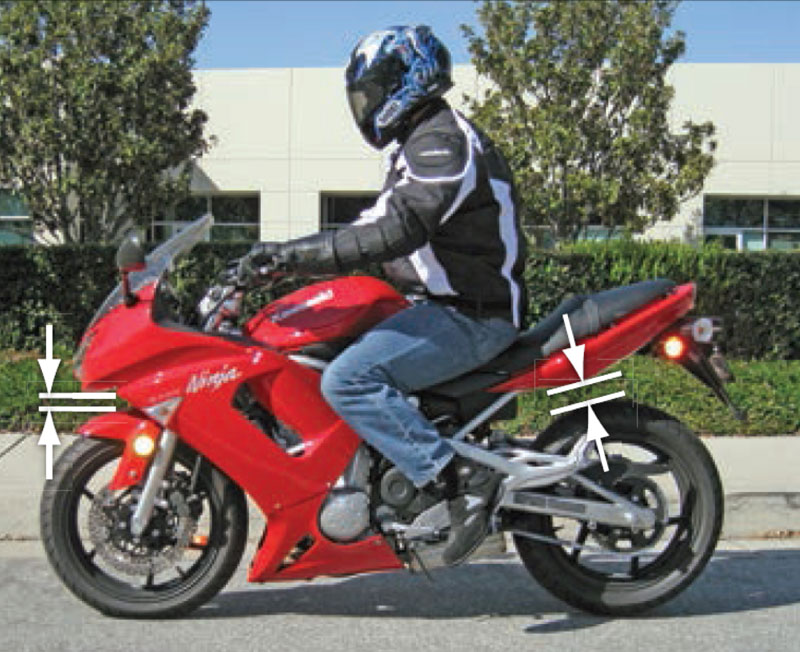
POSTURE WHILE BRAKING
Keep your body centered and look ahead. Squeeze your legs against the gas tank to keep from sliding forward on the seat.
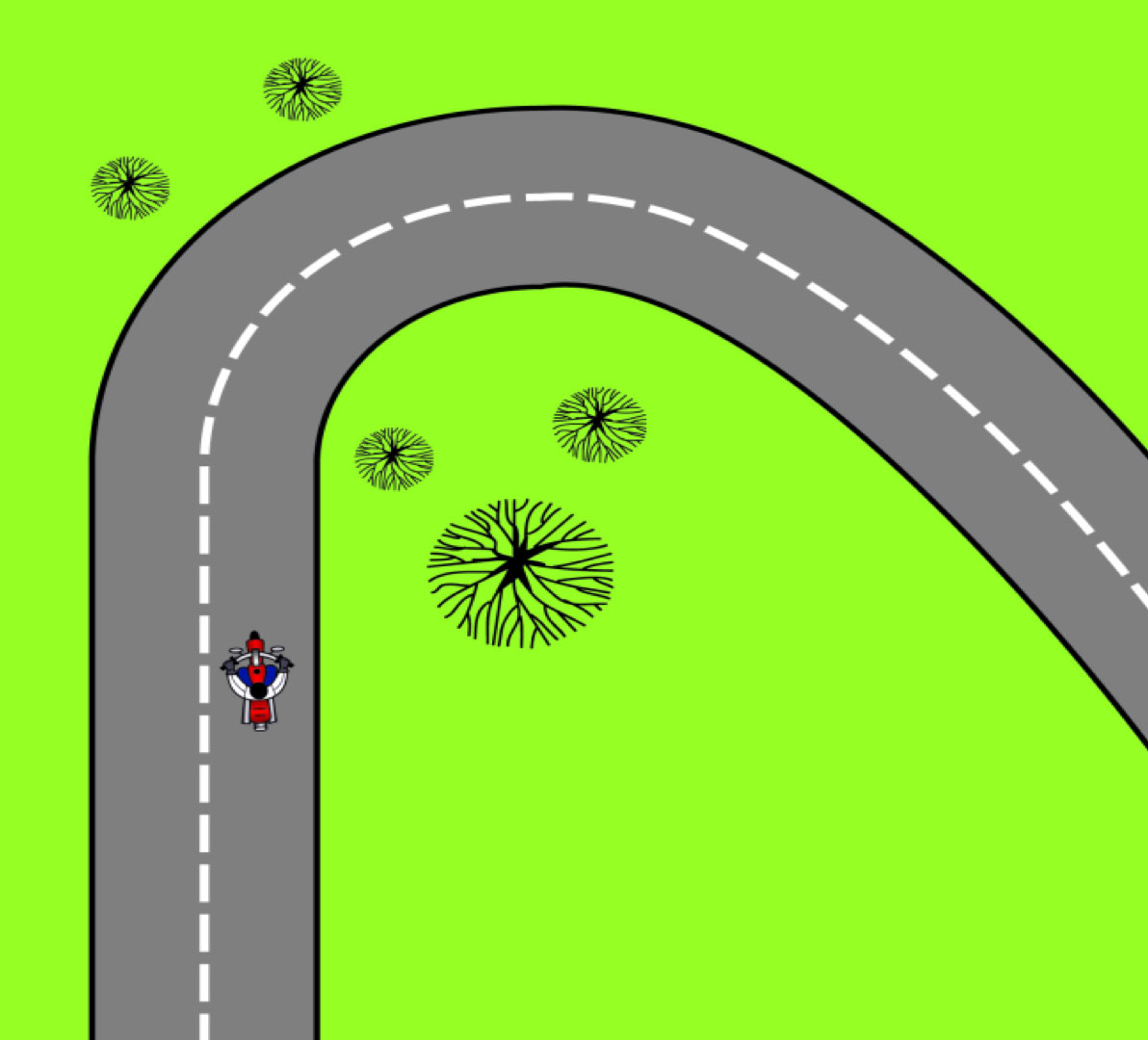
STOPPING IN A TURN
You have two choices. One is to straighten up first and make a quick stop in a straight line. The other is to apply some brake pressure while leaned and increase brake pressure as the motorcycle straightens up.
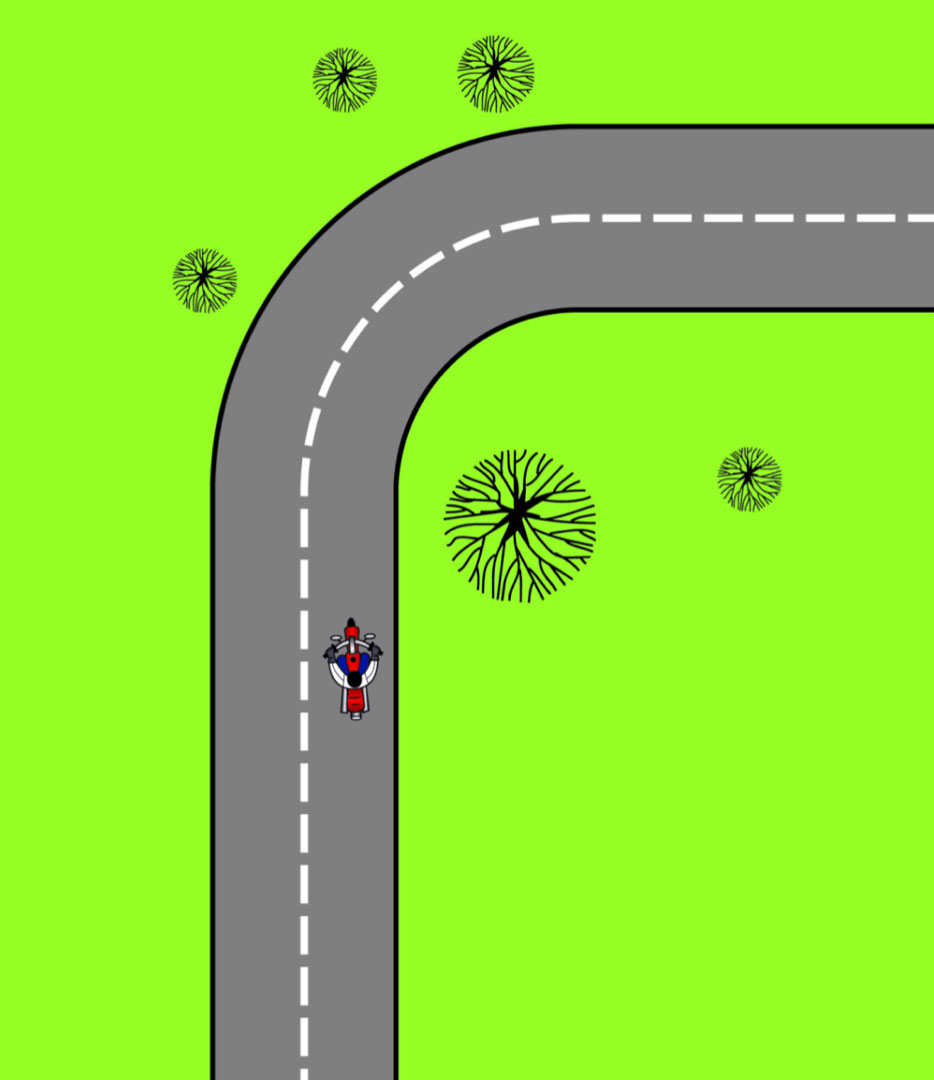
What procedure would you use to make an emergency stop in the middle of this curve?
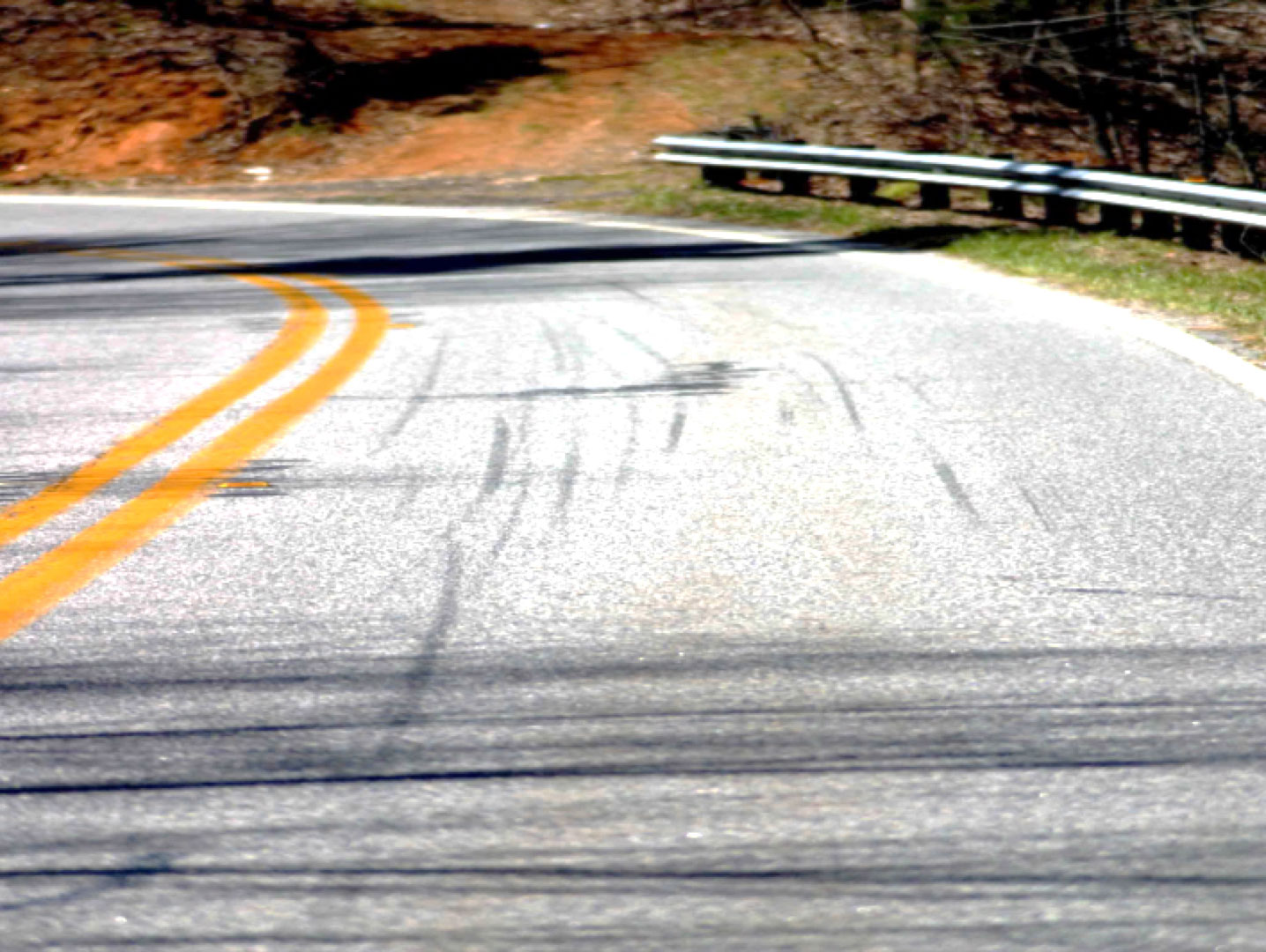
TRACTION LIMITS
It is best to have the motorcycle straight up, with the handlebars square, at the end of a stop.
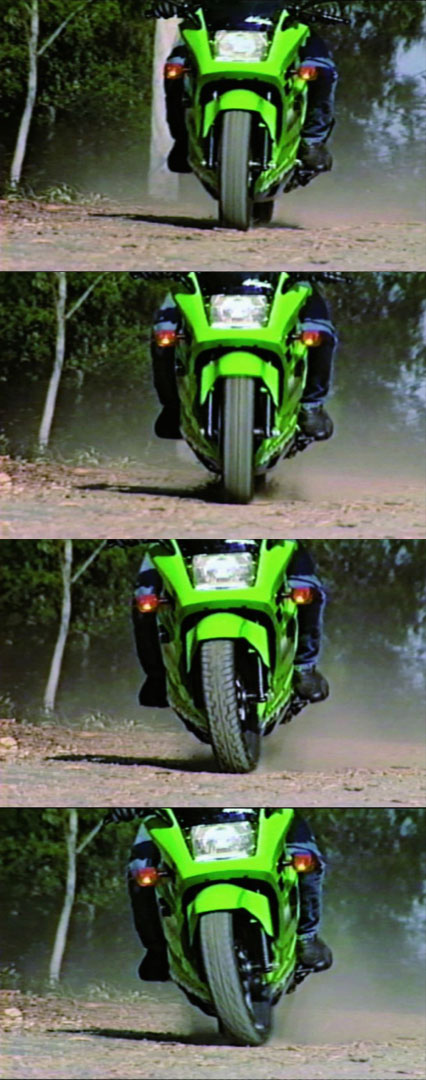
FRONT TIRE SKID
Too much front brake pressure can produce a skid. To keep from skidding, use the front brake lever with a progressive squeeze. 130If a front tire skid occurs, you must release the front brake lever to get the front wheel rolling again.
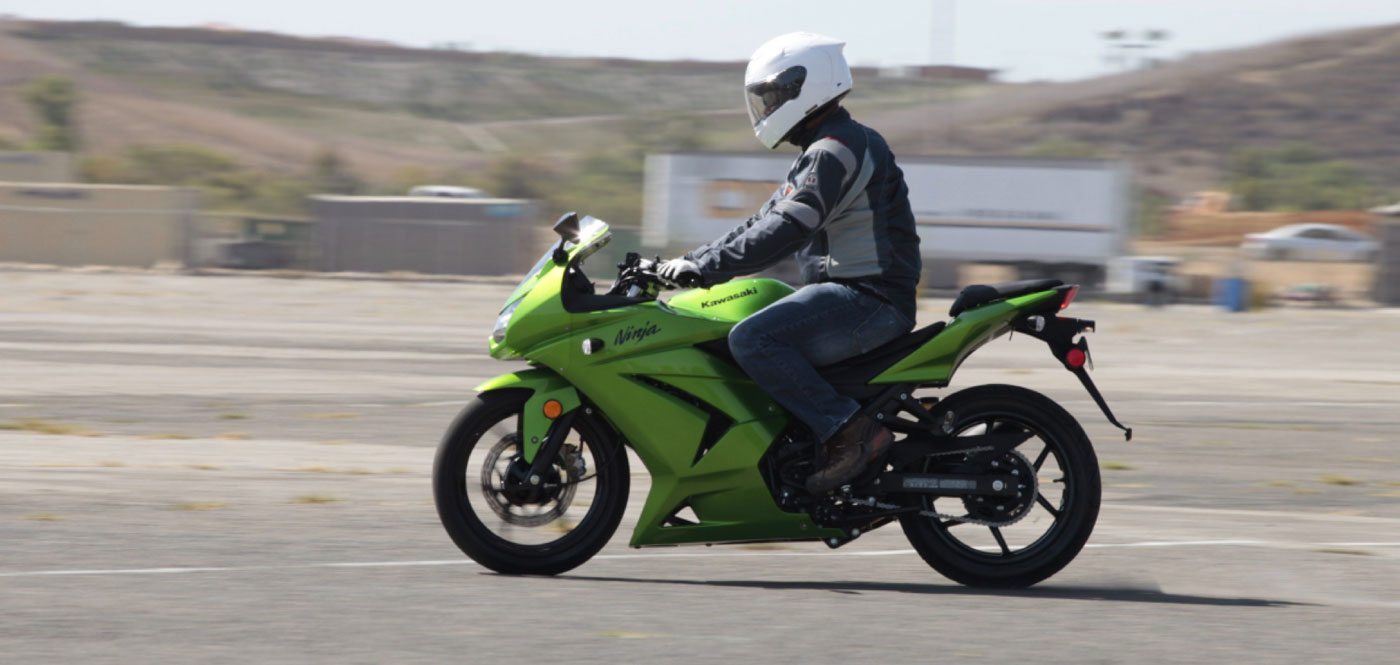
REAR TIRE SKID
You have to use less pressure so the rear tire does not skid. A rear tire skid can be straight or it can cause the back of the motorcycle to skid sideways. 131Do not release the rear brake pedal when the rear wheel is not in line with the front wheel.
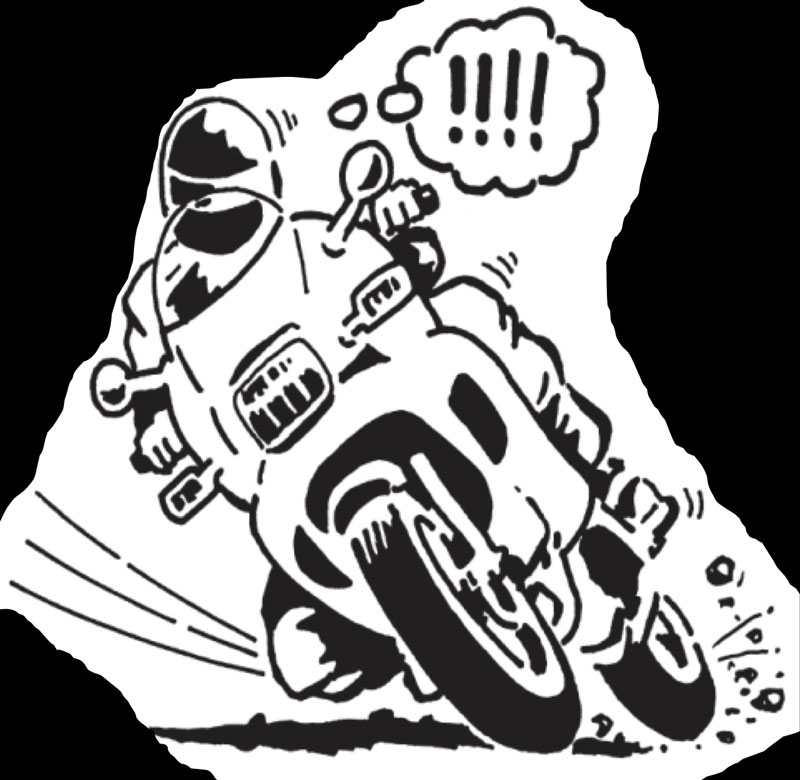
High Side or Low Side?
A High Side refers to being thrown from the motorcycle and the Low Side refers to a typical fall to the ground. High Side falls can result in more severe injury!
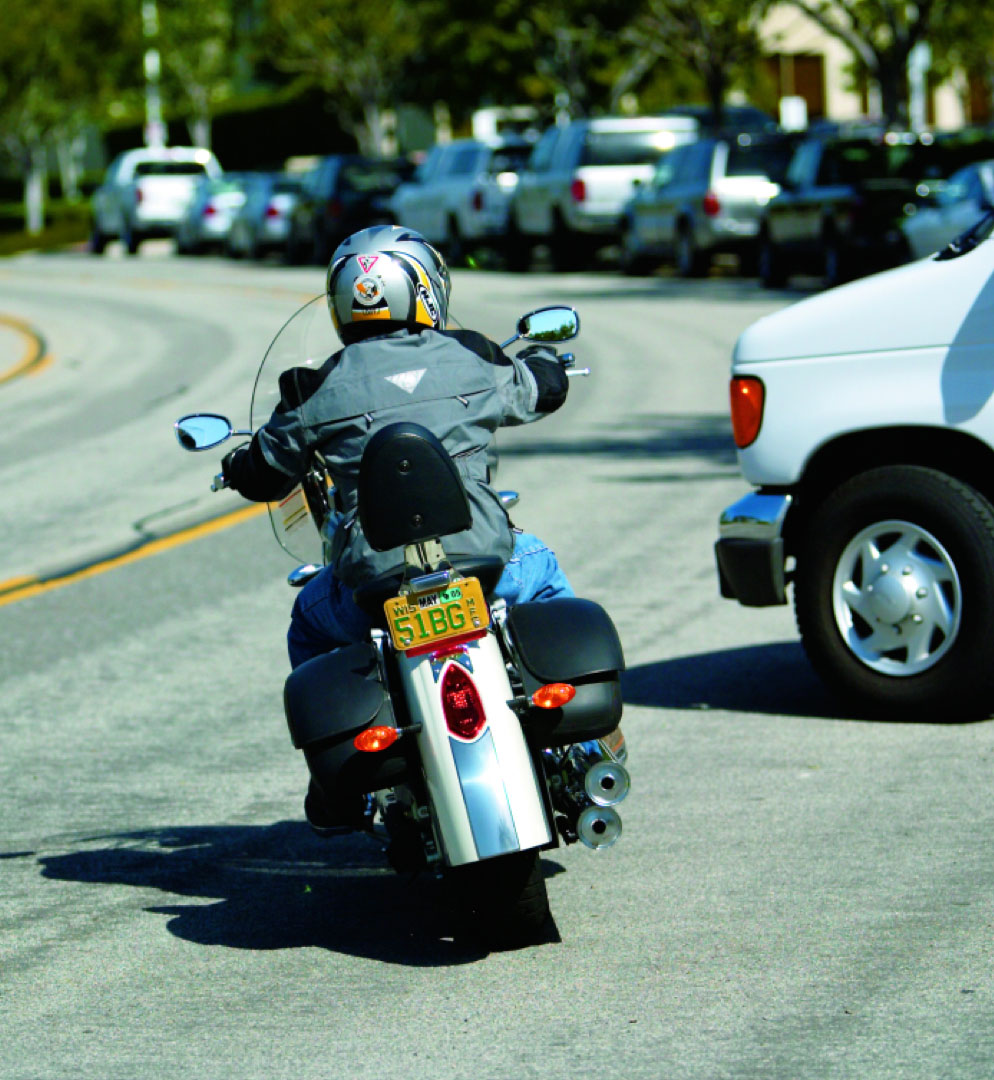
SWERVING
Swerving refers to an emergency procedure where you change direction quickly to the right or left, whether you are going straight or in a curve. There must be good traction and a clear path. Swerving skillfully requires practice.
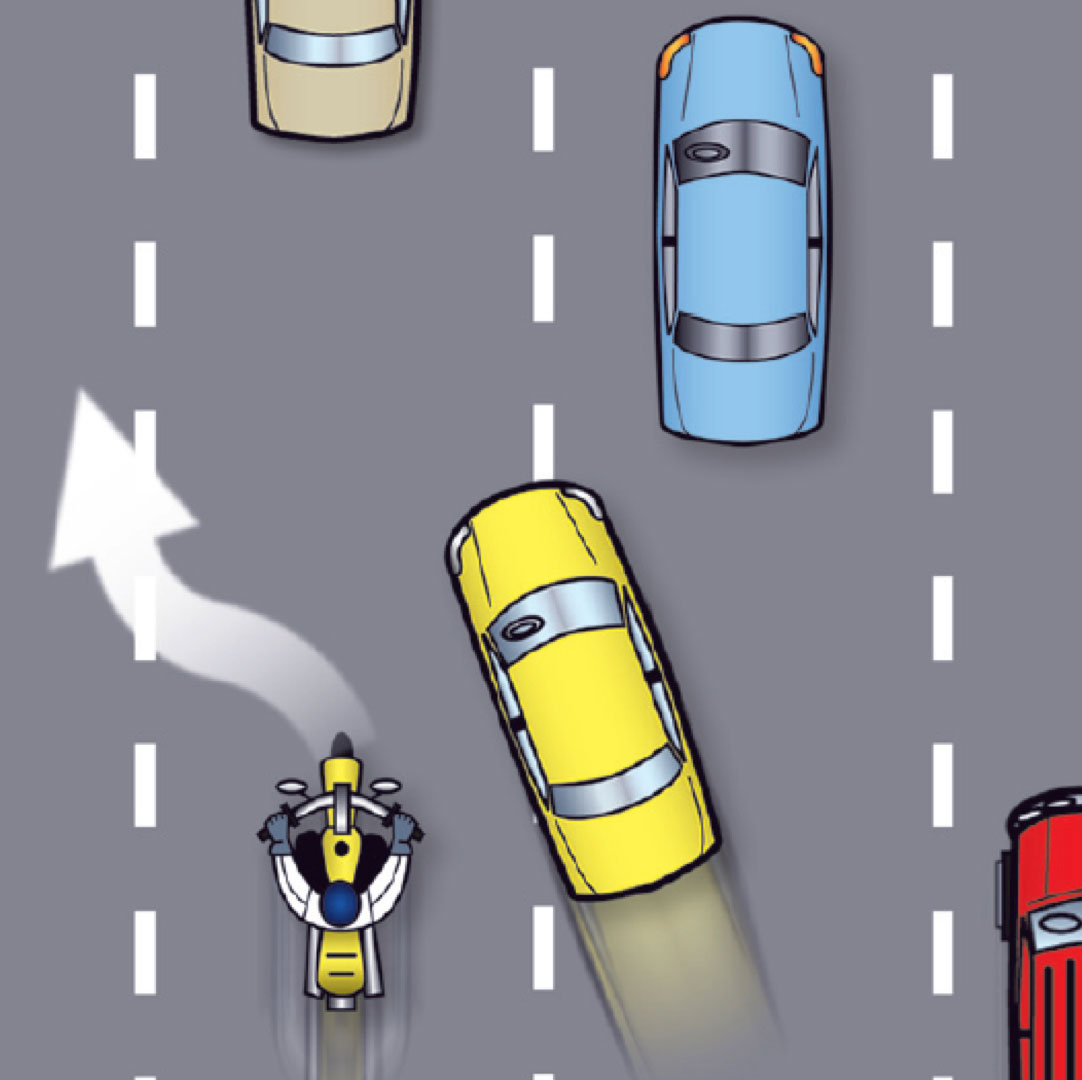
THE BRAKE OR SWERVE DECISION - Swerve, Then Brake
The decision whether to brake first or swerve first in an emergency is critical. 134You need excellent Search skills so you can effectively Evaluate and use your escape options. Keep in mind an escape option can change quickly if the hazard is moving.
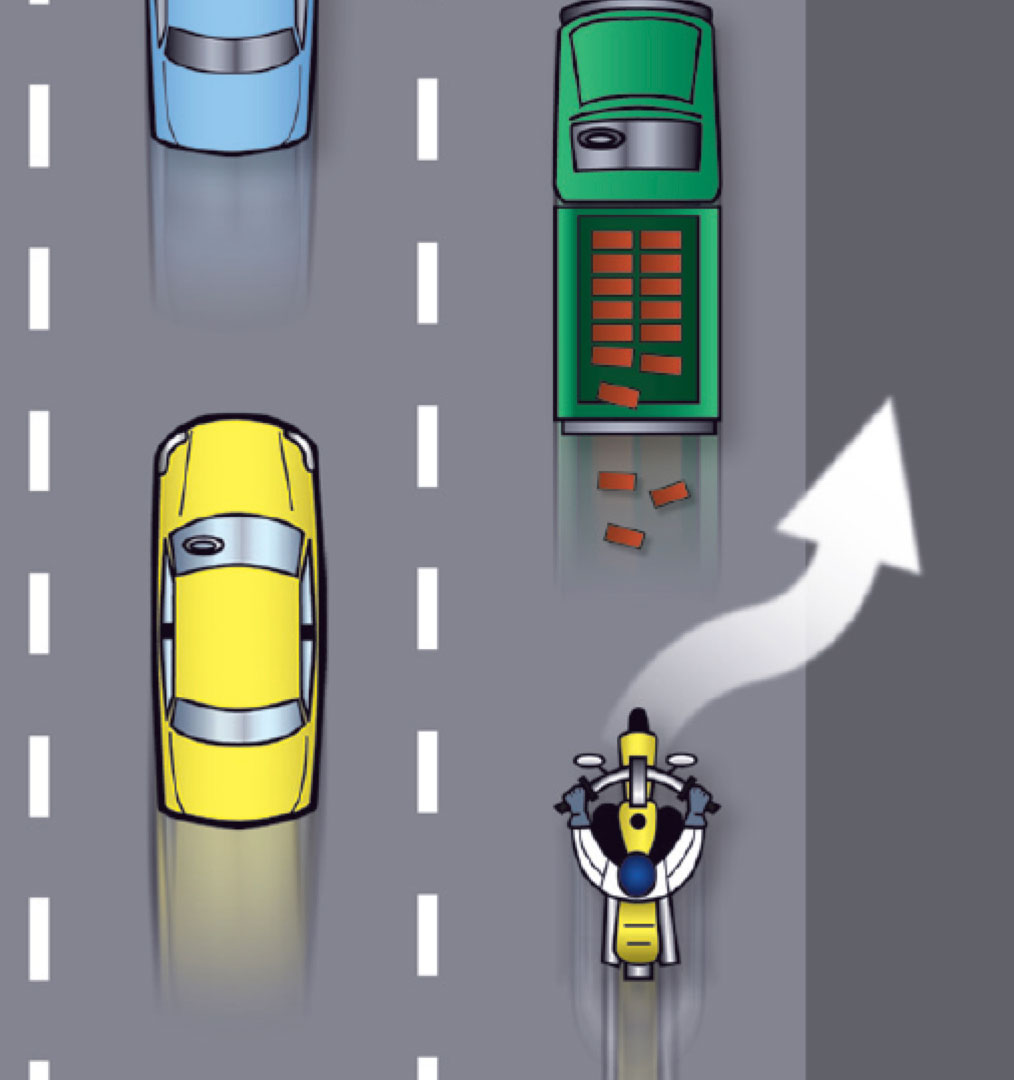
THE BRAKE OR SWERVE DECISION
Brake, Then Swerve
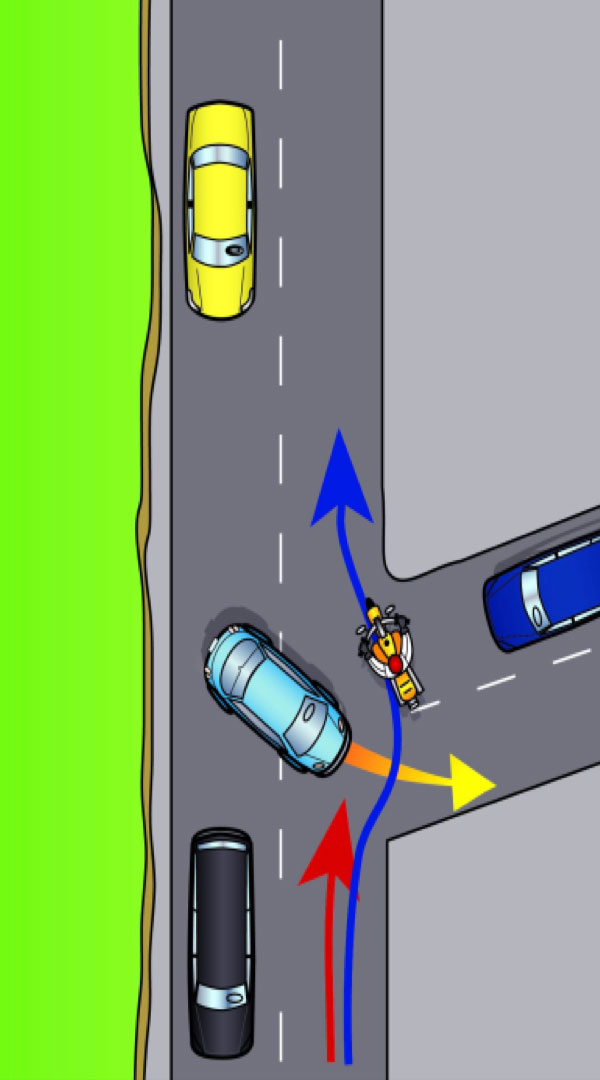
THE BRAKE OR SWERVE DECISION
What if?