SECTION 3. CONTROLS, INDICATORS & EQUIPMENTSQ
Hands and feet are used to operate and control a motorcycle. You must know the location and operation of the primary controls and be smooth and precise when using them. The controls and equipment described here are for motorcycles with a gasoline-powered engine and a manual transmission. (Some motorcycles have an electric motor and/or automatic transmission.)
PRIMARY CONTROLS
8Handlebars
Throttle
Clutch Lever
Gearshift Lever
Front Brake Lever
Rear Brake Pedal
OTHER CONTROLS
The location and operation of other controls may vary. The best source of information is the motorcycle owner's manual.
Front Brake Lever
13In front of the right handgrip and operated with the fingers of the right hand. Squeeze it in to operate.
INDICATORS AND EQUIPMENT
Rear Brake Pedal
13In front of the right footrest and operated with the right foot. Press down to operate it.
INDICATORS AND EQUIPMENT
Motorcycles include indicators that display information. They also have equipment to aid in safe operation and to communicate with others.
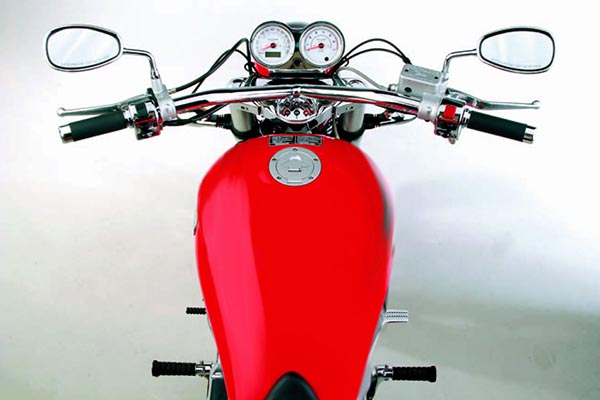
PRIMARY CONTROLS
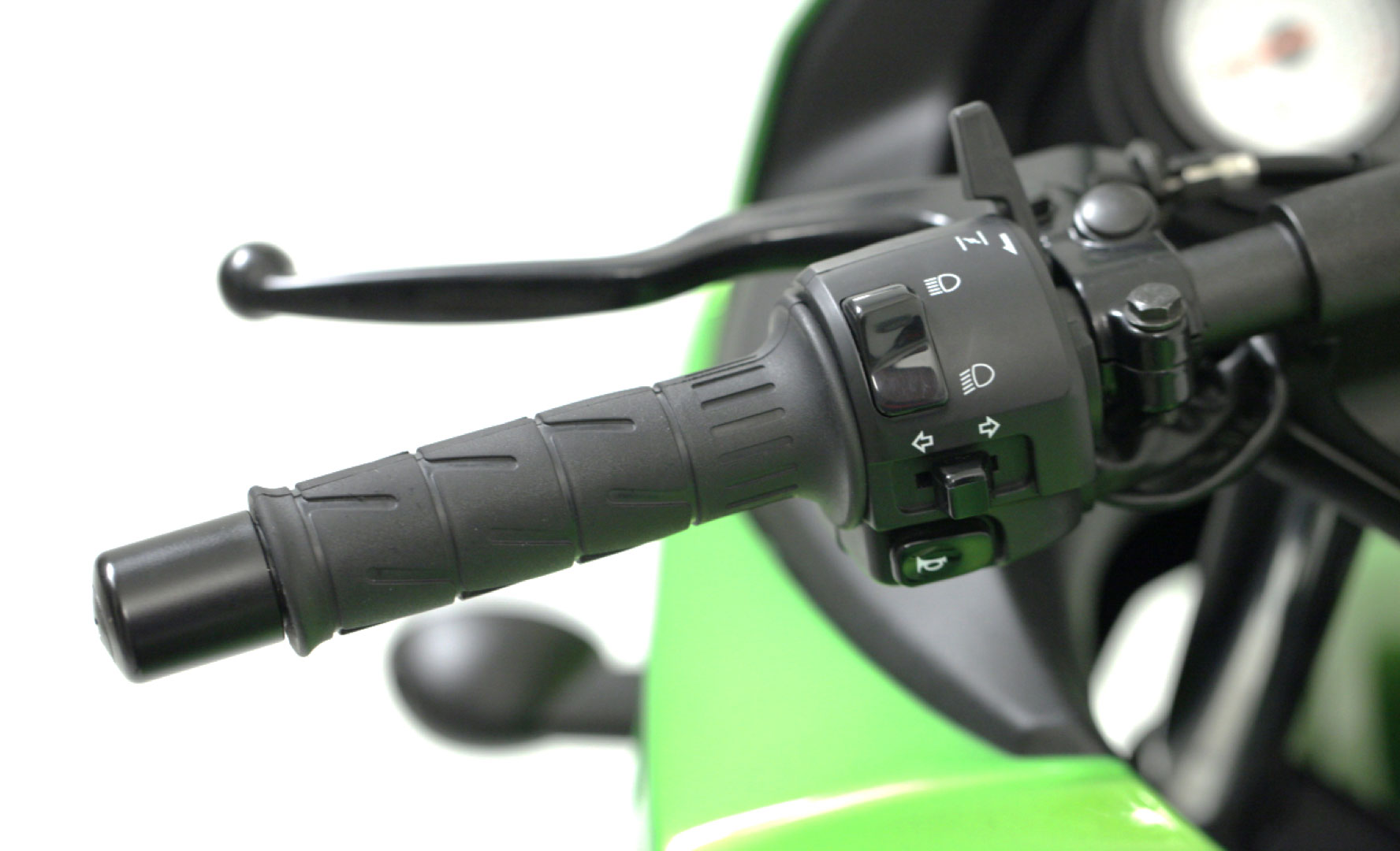
Clutch lever and other controls
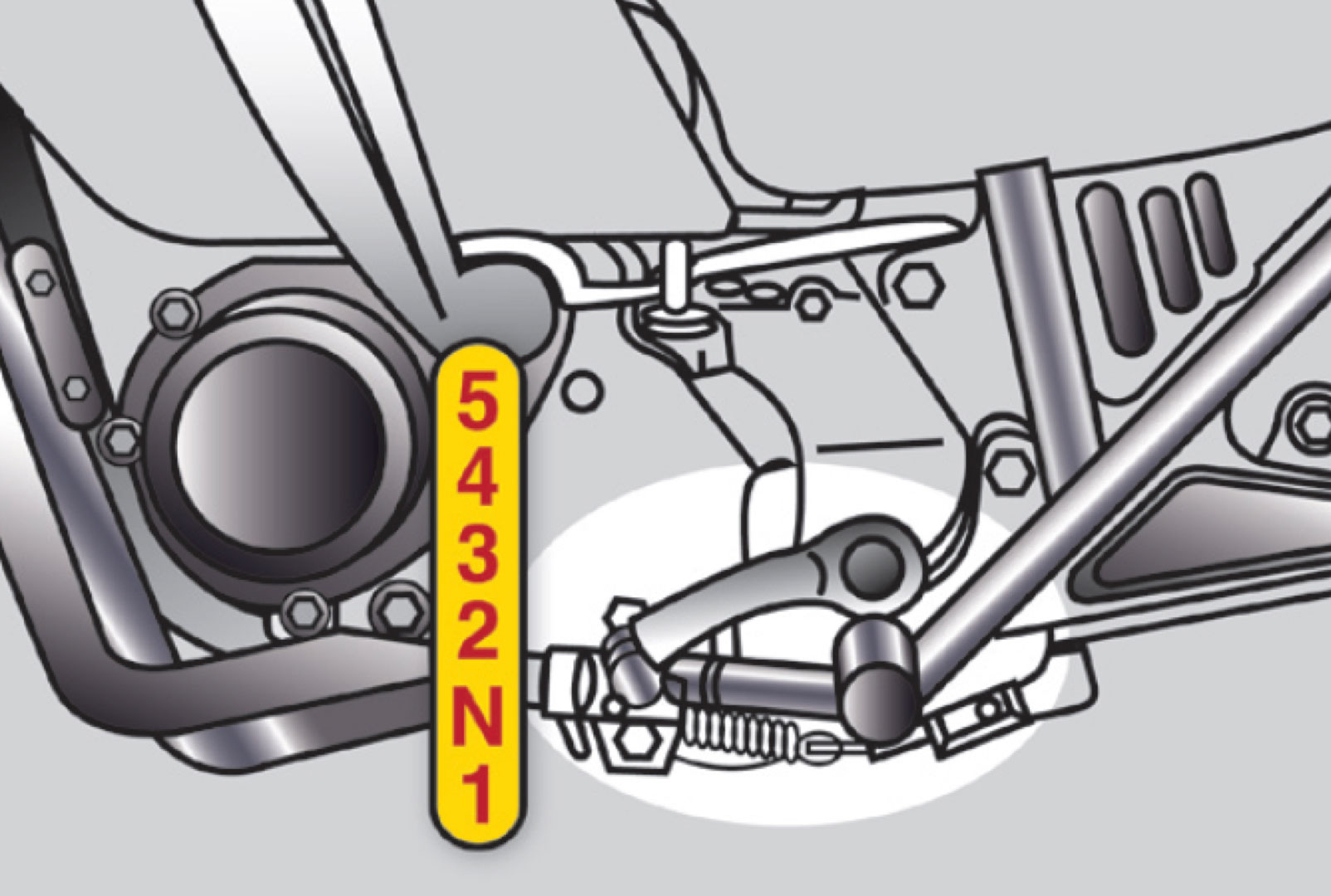
Typical Shift Patern
Most motorcycles have five or six gears with 1st gear at the bottom, neutral is between 1st and 2nd gear.
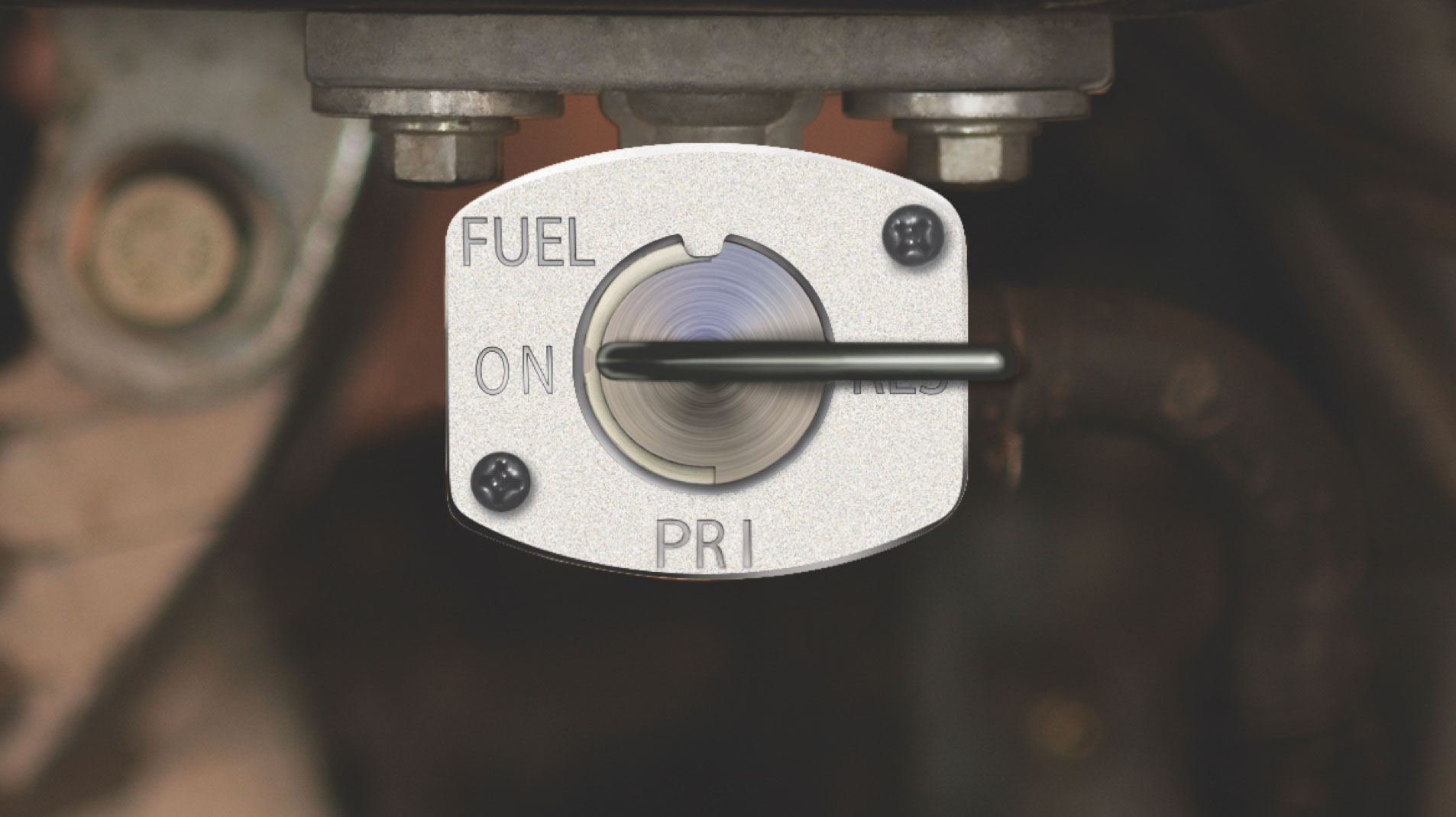
Fuel Valve - on position
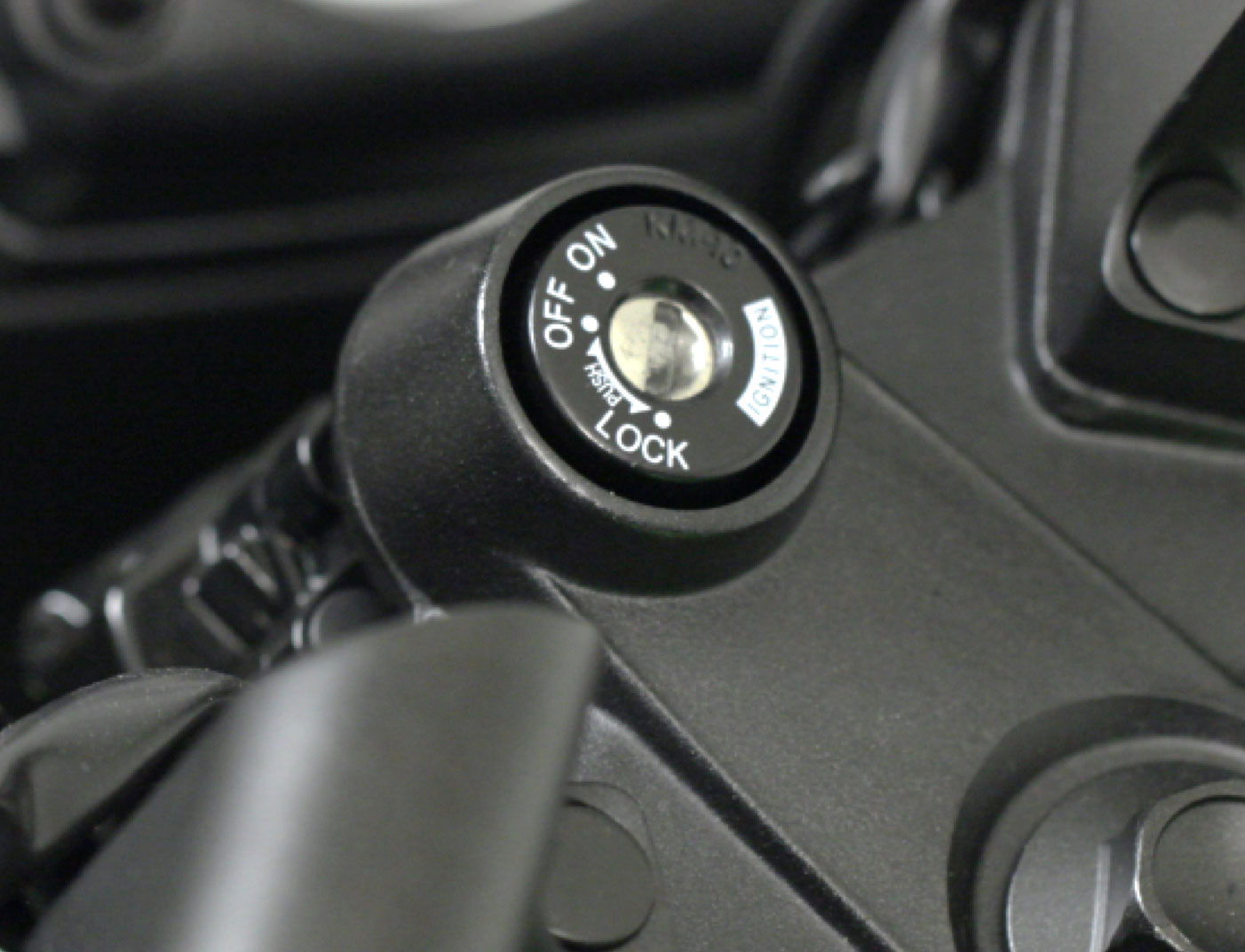
Ignition Switch
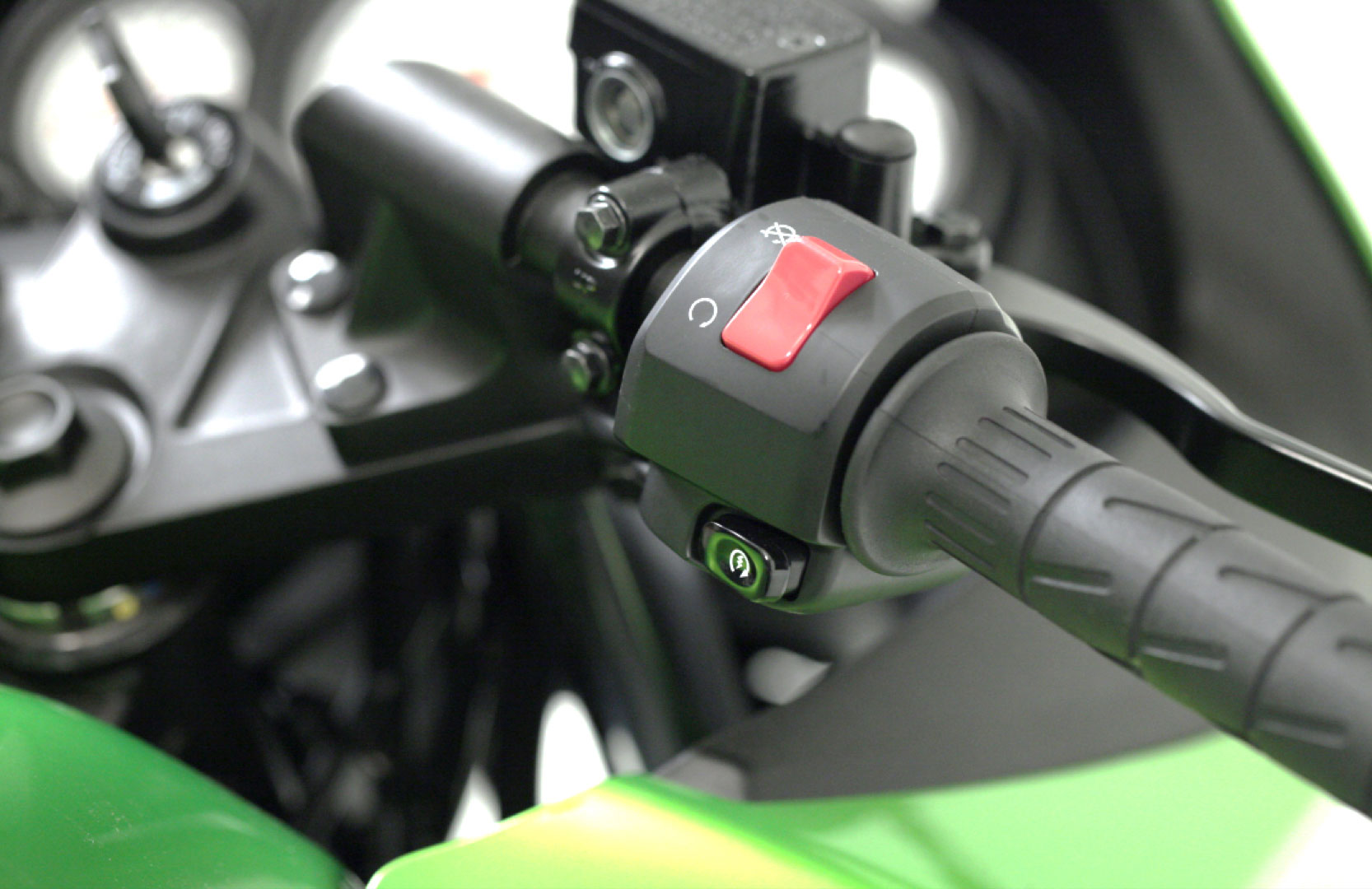
Engine Cut-off Switch
Near the right handgrip and operated with the thumb.
17It allows you to shut off the engine without removing your hand from the handgrip.
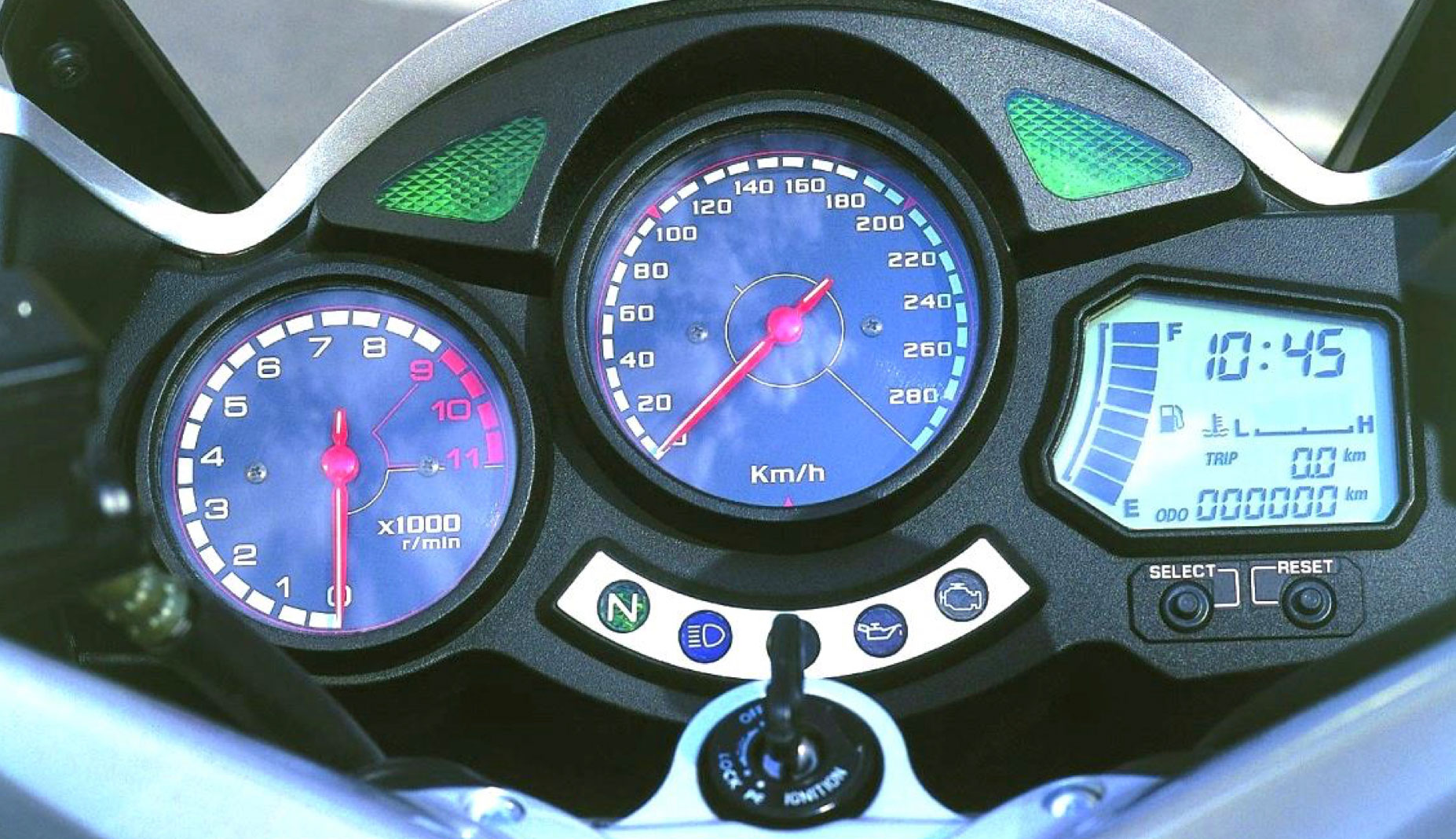
Instruments and Indicators
Speedometer - road speed
Tachometer - engine speed
Odometer - distance traveled
Lights - Neutral, high beam, turn signal, oil pressure, and more.
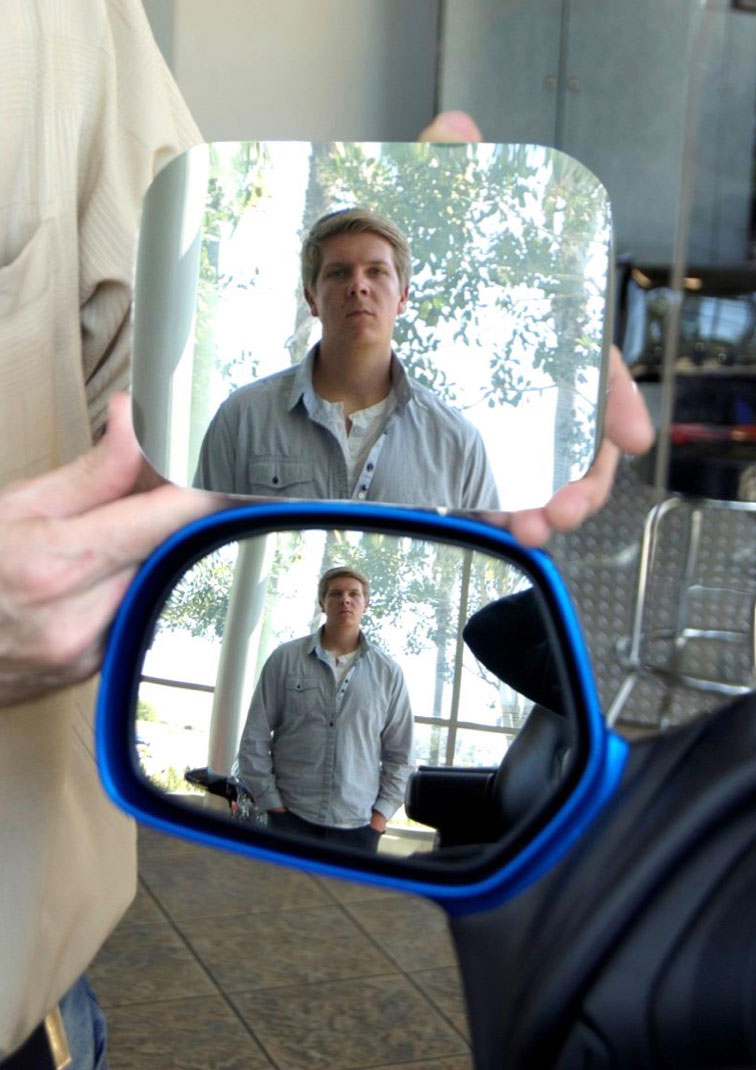
Mirror - Flat vs. Convex
Motorcycles have convex mirrors that are curved to provide a wider view but make objects look farther away.
19 Convex mirrors may reduce the size of blind spot areas, but they do not eliminate them.
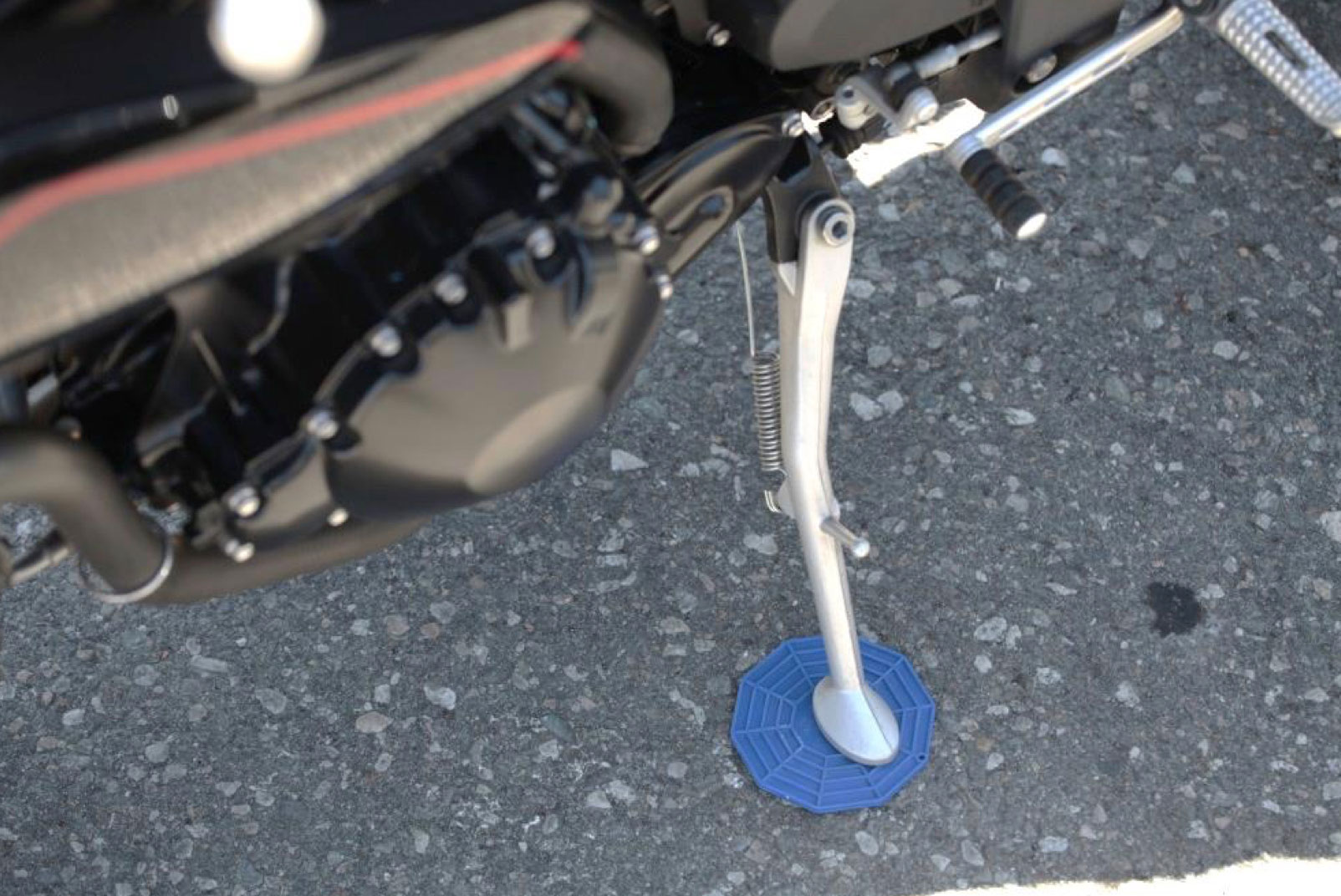
Side Stand