SECTION 8. STRATEGIES FOR COMMON RIDING SITUATIONSSQ
Crashes are caused by an interaction of factors, or a combination of hazards. You can manage risk by being able to Search-Evaluate-Execute (SEE) well. Below are common riding situations and ways to help you be a better, safer rider.
INTERSECTIONS
92 The greatest potential for a conflict between you and other traffic is at intersections. 93 You want to have 360° awareness. Be aware of traffic ahead, behind, and on the left and right. 94 Presentation, which means to use a lane position where others are best able to see you.
BETWEEN INTERSECTIONS
Watch for vehicles pulling out of parking areas or backing out of driveways. Notice parked cars where a car door could open in your path. Search for people or animals that could dart out in front of you. Look for pedestrians, bicycles, and other vehicles that could affect escape paths.
FREEWAY MERGING AND EXITING
Watch for traffic behind you that will also enter the freeway. If possible, try to match the speed of the traffic flow on the freeway before you reach the end of the on-ramp or acceleration lane. Have an escape path, which could be the shoulder area.
CURVES
1. Constant radius, which has the same curvature throughout.
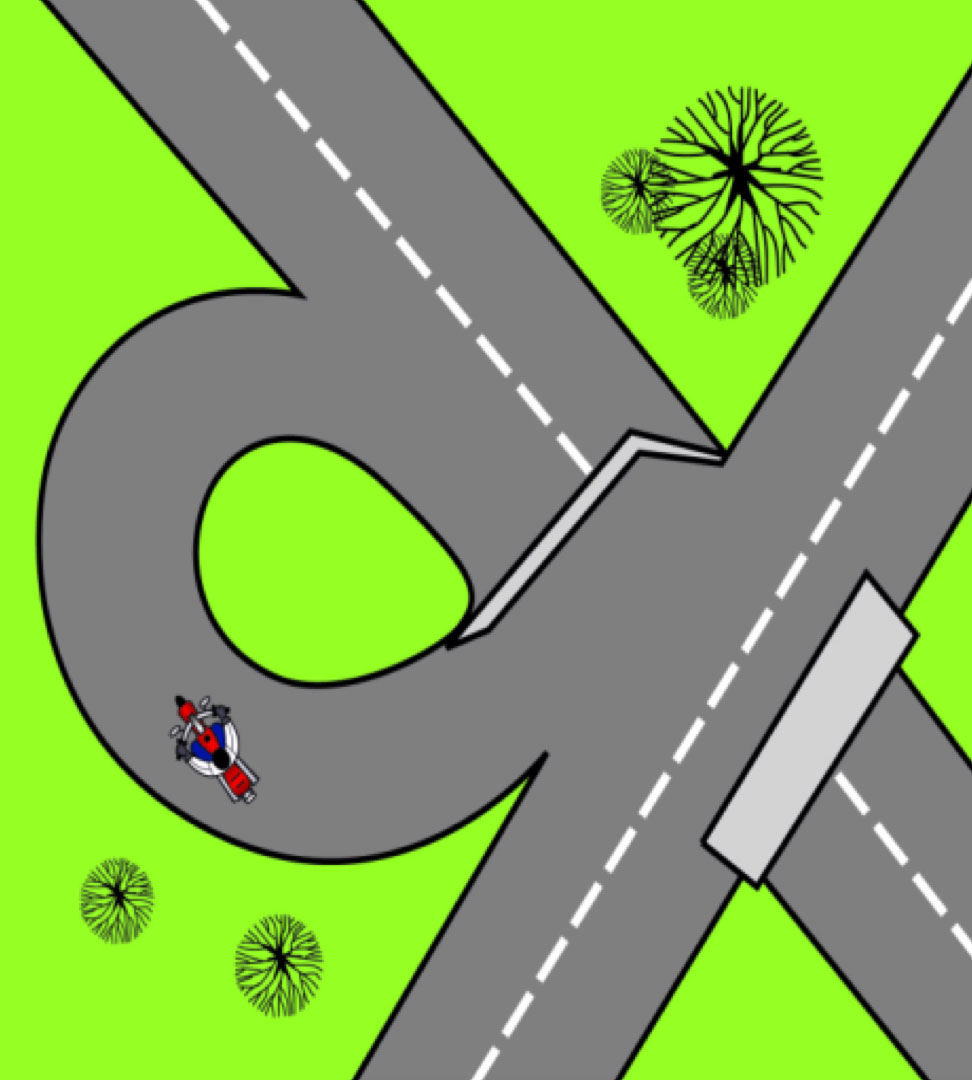
2. Increasing radius, which has the curve open up.
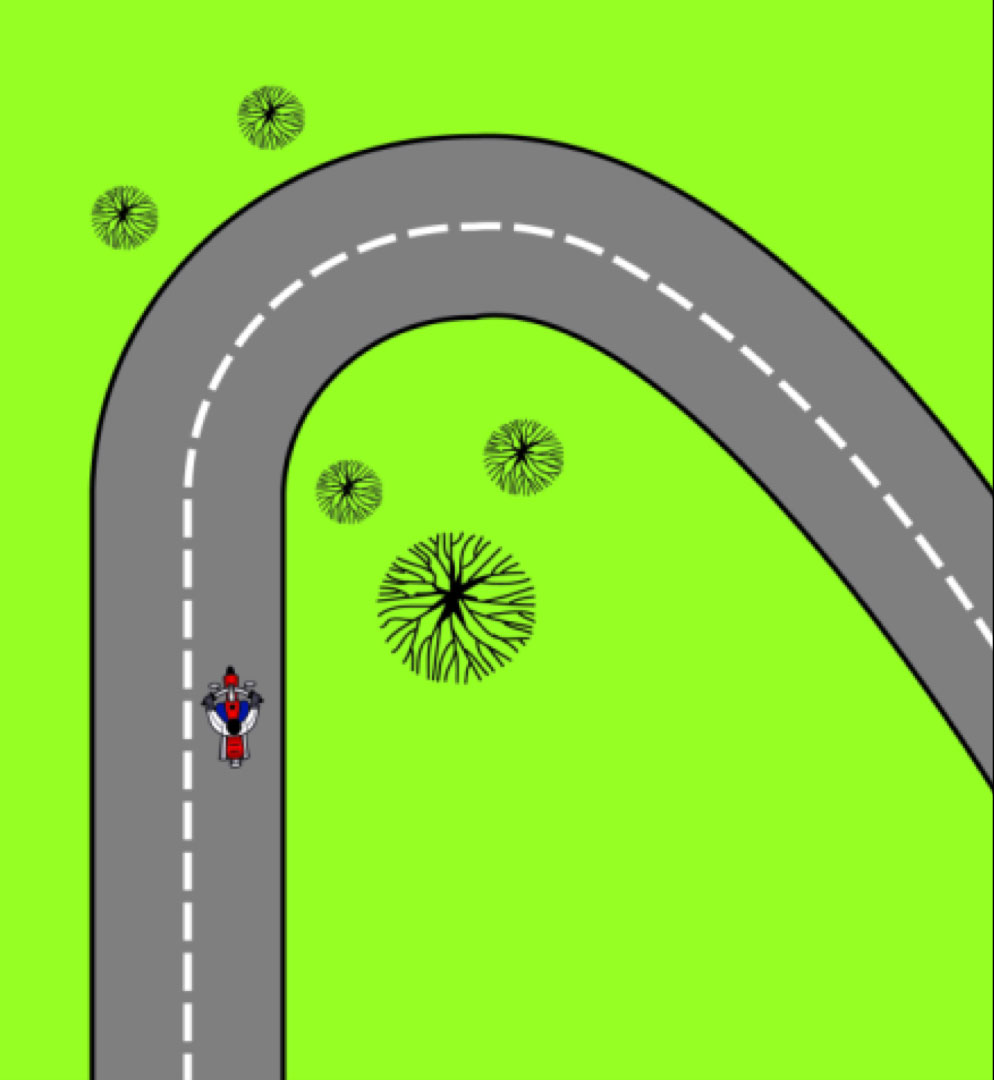
3. Decreasing radius, which has the curve close up and become progressively tighter.
Search - Evaluate - Execute
LIMITED-SPACE MANEUVERS
Using a very low speed and sharp handlebar turn. As needed, touch a foot to the ground (dab).
STARTING ON A HILL
111 A special procedure is needed to start out on an uphill grade. A good way is to apply one of the brakes to prevent rolling backwards.
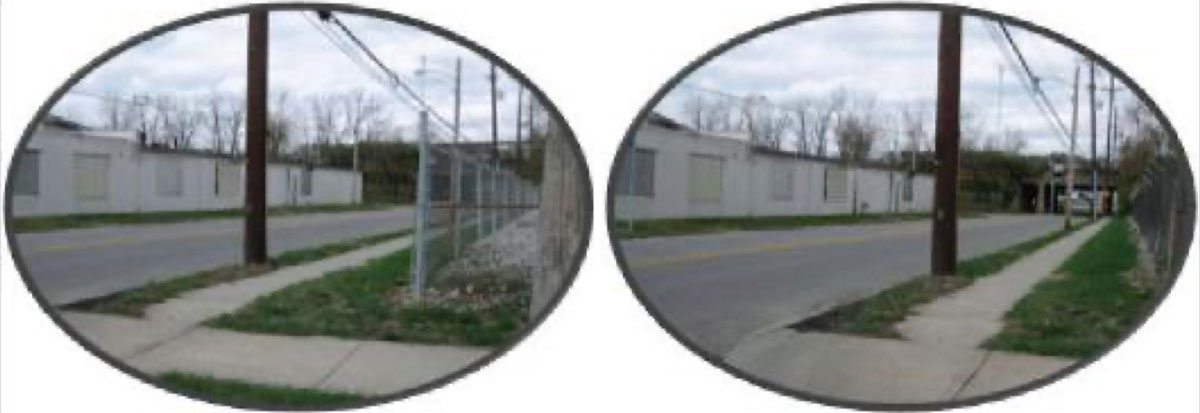
Open Up The View
At some intersections, it may be necessary to stop more than once, especially to Open Up the View the best you can. 95 This means to use a position to see and be seen in both directions without interfering with cross traffic or pedestrians.
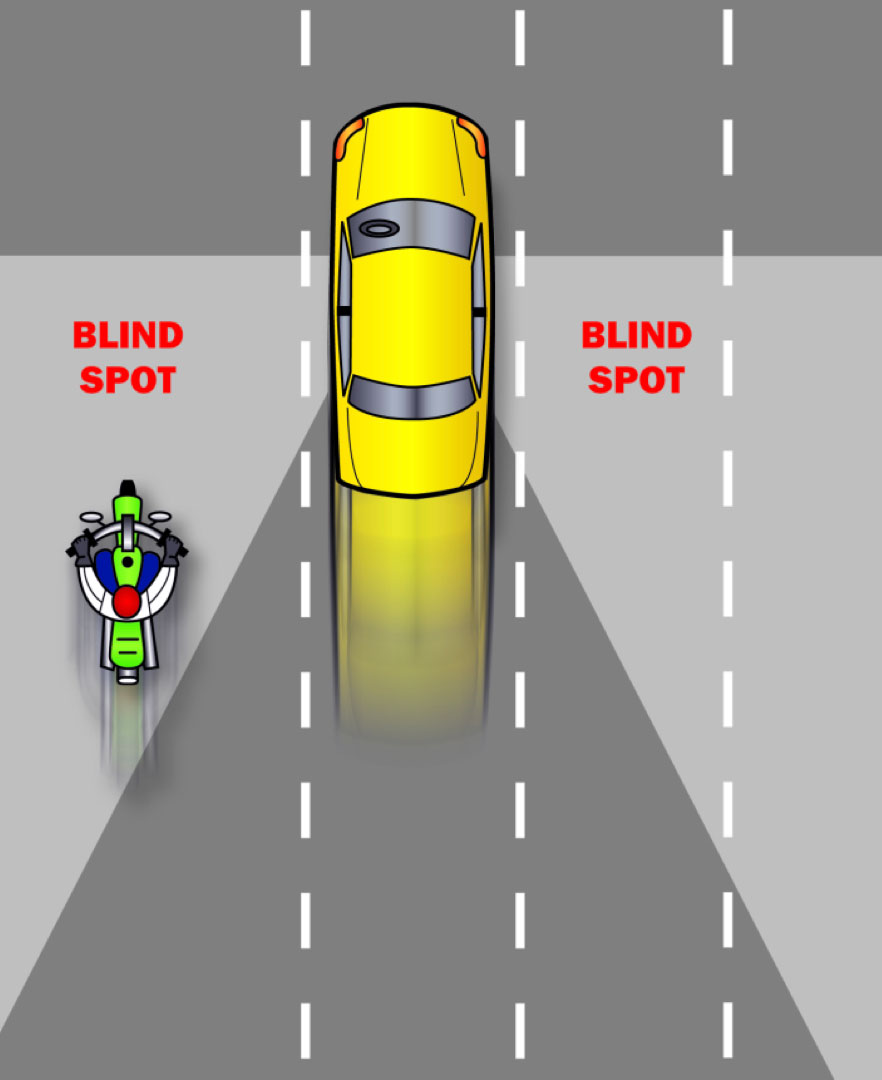
Blind Spots
99You have blind spots behind and beside you that you cannot see in your mirrors. Even if your mirrors provide good coverage to the rear, check the blind spots with a head check (a glance over your shoulder) whenever you change lanes, pass a vehicle, pull into traffic, or adjust lane position.
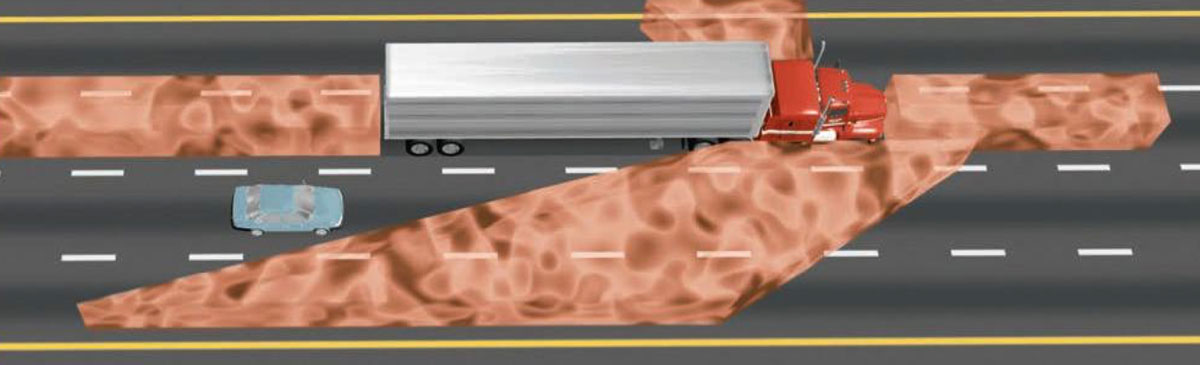
No Zone
The No-Zone refers to blind spots around large trucks.

Search - Setup - Smooth
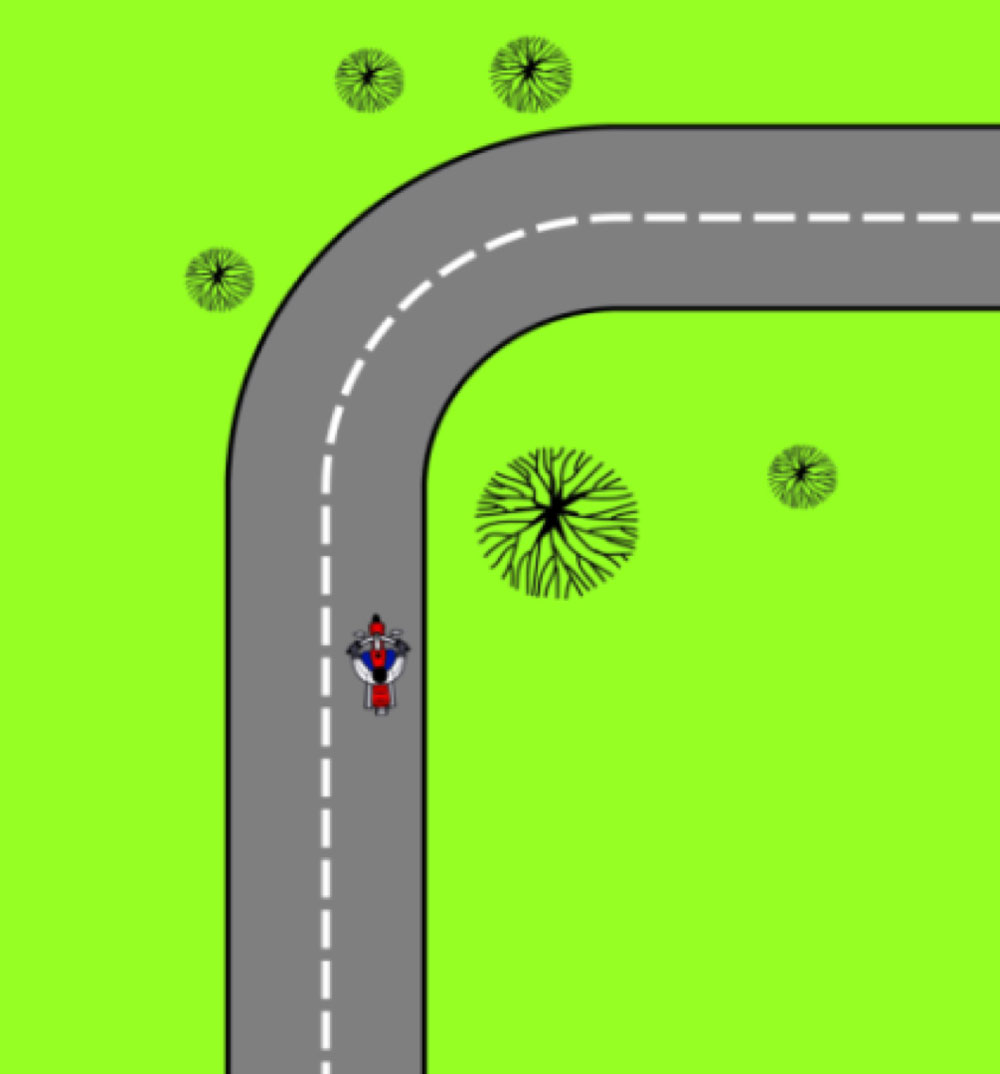
Constant Radius
Increasing Radius
Decreasing Radius
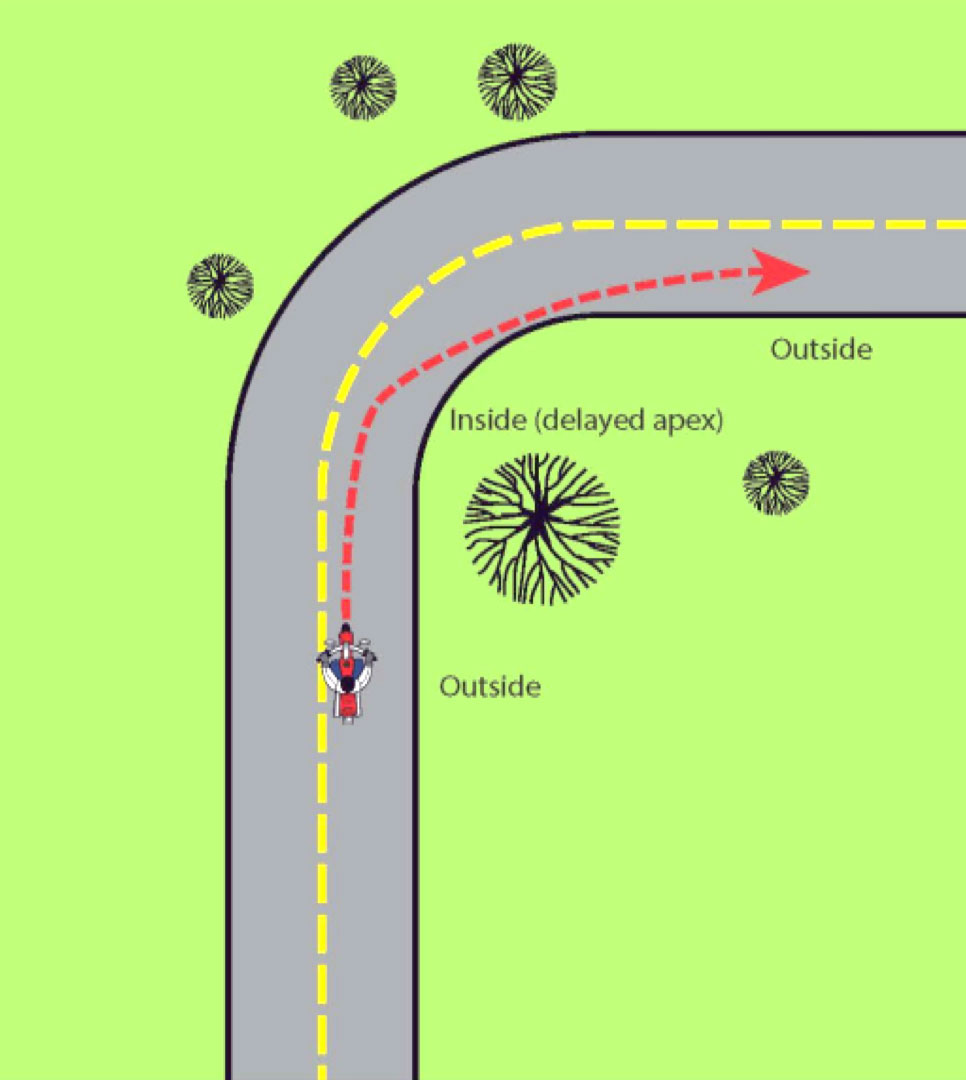
Delayed-Apex Strategy
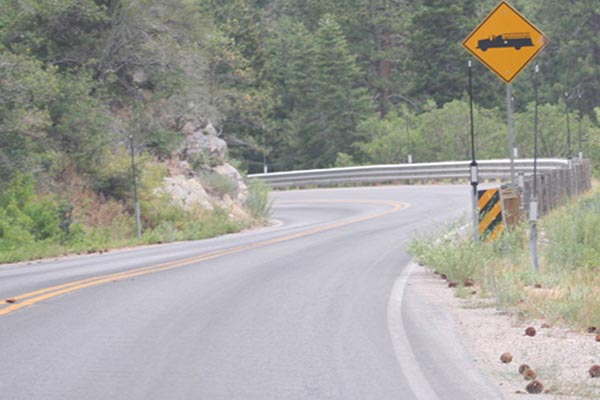
Search-Evaluate-Execute
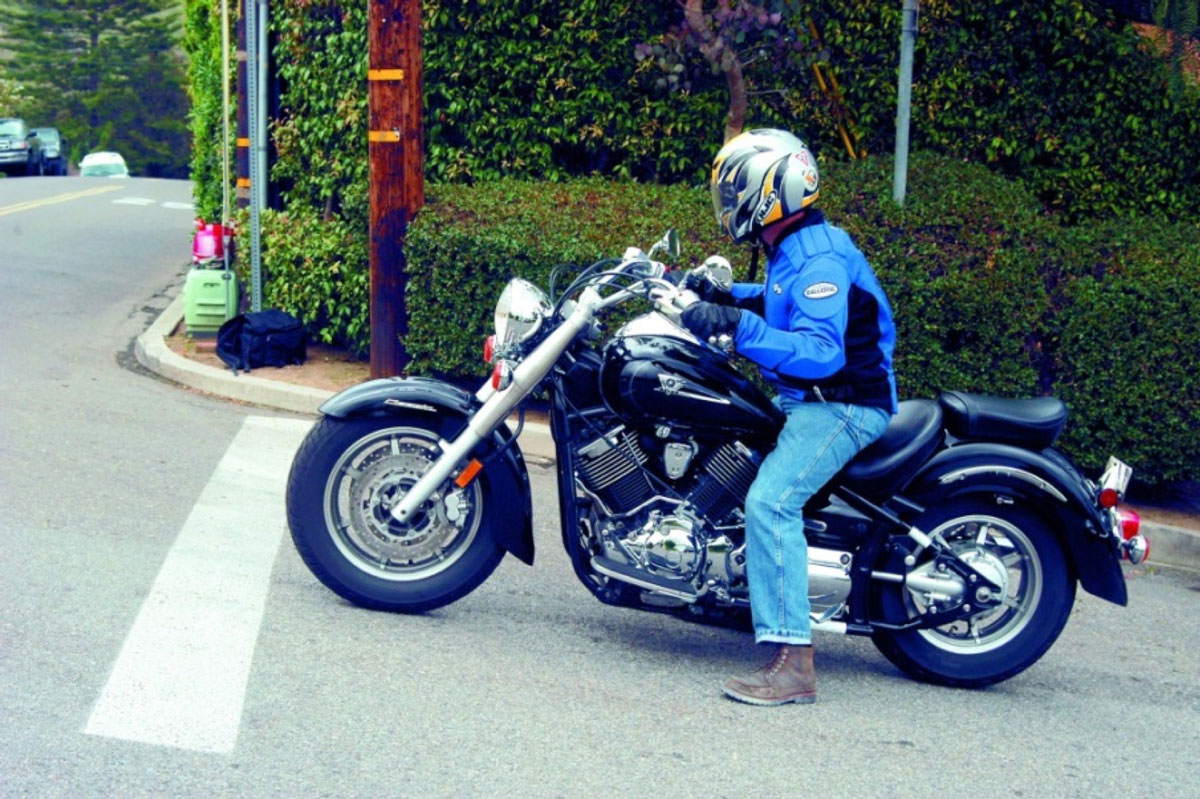
Starting Out On A Hill
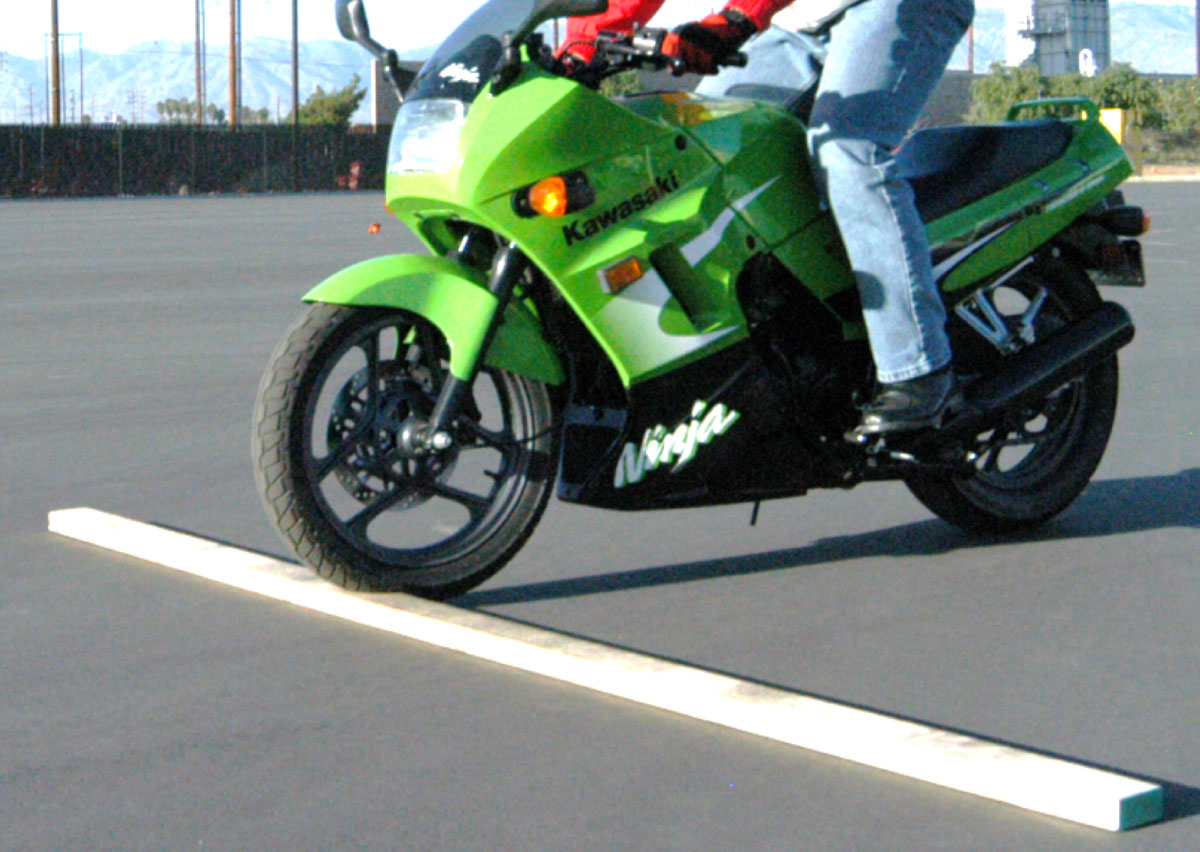
Obstacles - Using Your Legs!
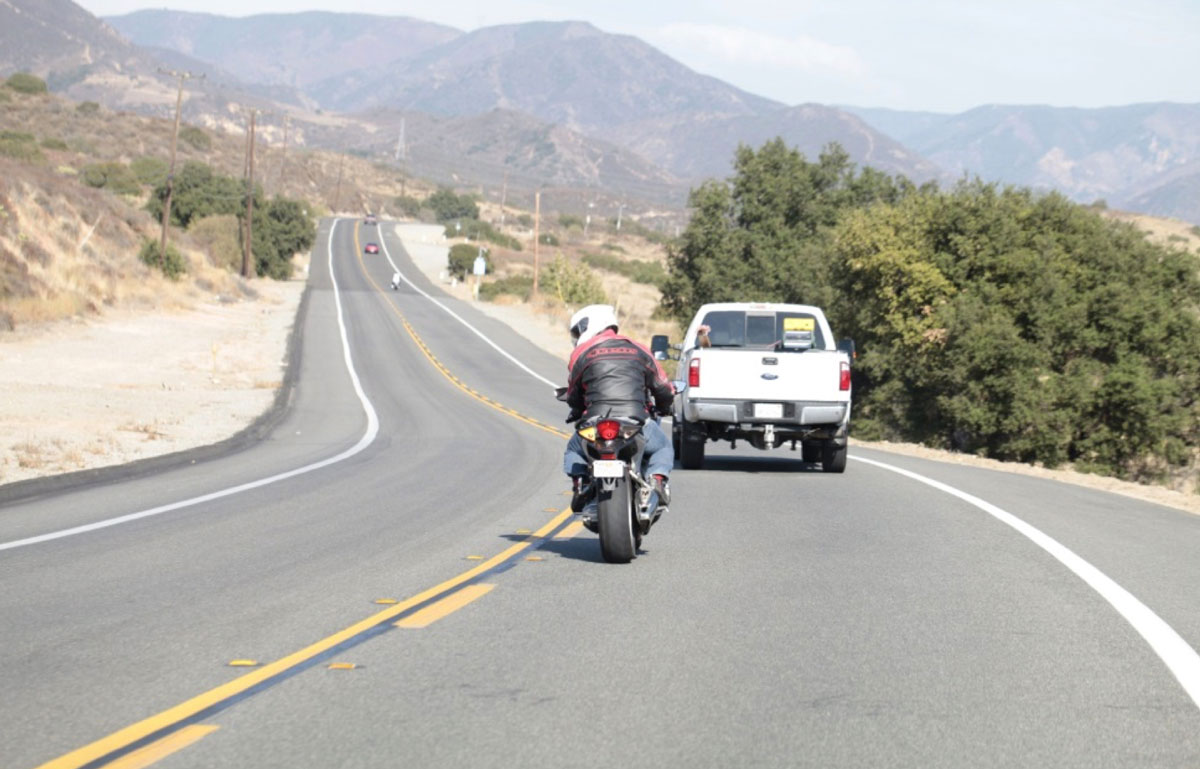
PASSING
The passing procedure for a motorcycle is similar to a passing procedure for a car. 116Avoid passing more than one vehicle at a time. The driver in front of the line may turn left, and any driver could pull out to pass. To complete a pass:
1. Keep a good following distance and move to the left third of the lane.
2. Have a safe passing gap ahead.
3. Check your mirrors and blind spot (with a head check) and turn on your signal.
4. Change lanes and accelerate.
5. Cancel your signal.
6. Select a lane position that gives you space from the vehicle you are passing.
7. When past the vehicle, check your mirror and blind spot (with a head check), signal, and return to your lane.
8. Cancel your signal.
9. Continue to SEE.
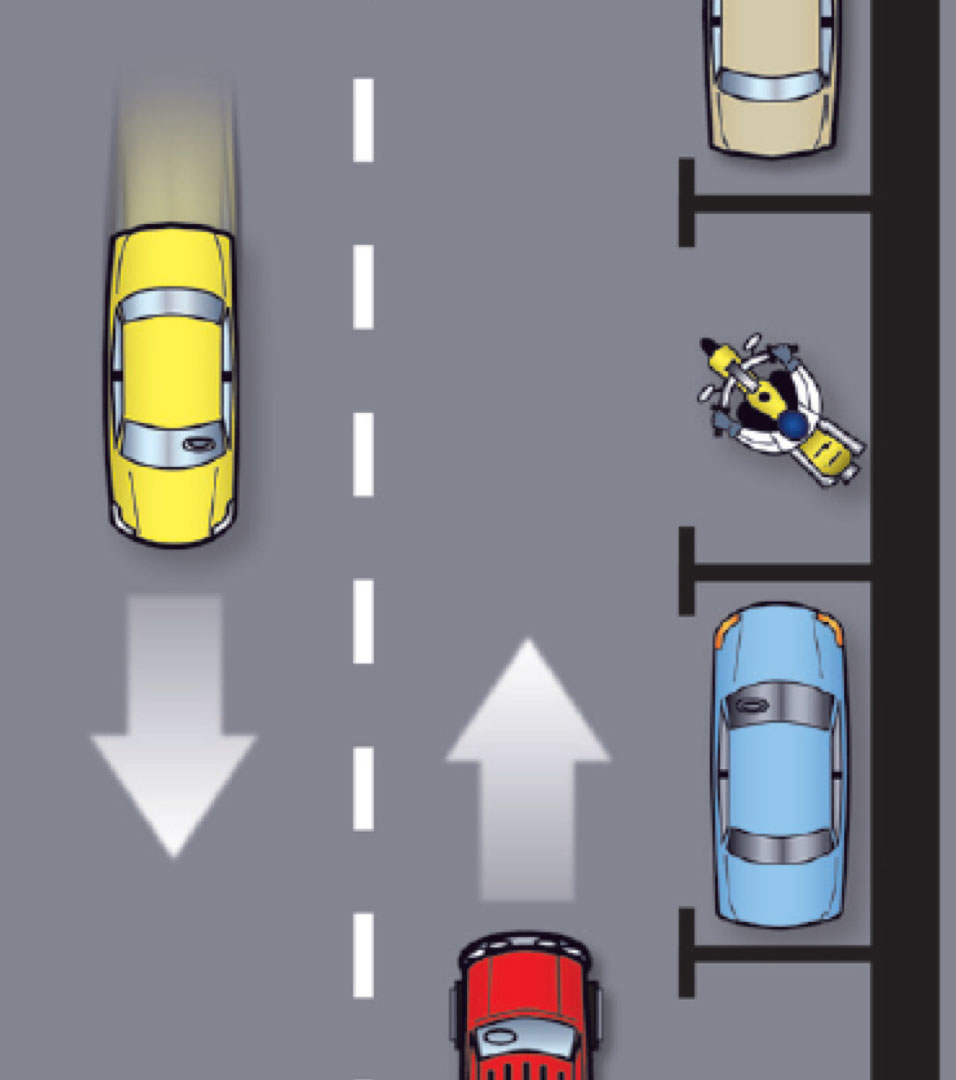
Parking
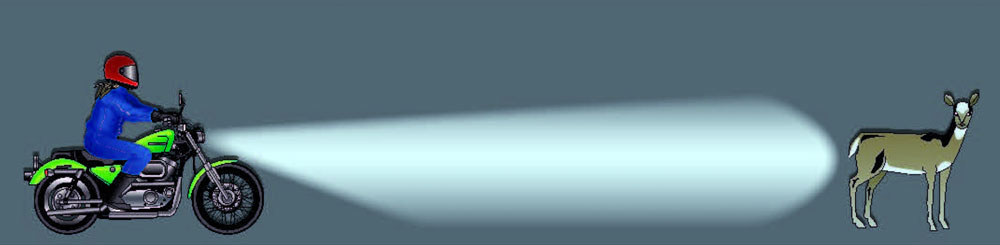
Overriding The Headlights
Riding at night, including at dusk and dawn or in other limited visibility conditions such as fog or dust, reduces what you can see and what others can see.
118
1. Wear bright, reflective materials.
2. Use your high beam when you can.
3. Use the lights of other vehicles to help you see what is ahead.
4. Watch for taillights that bounce because it could indicate a road surface hazard.
5. Flash your brake light when slowing and when waiting at intersections.
6. Add lighting to your motorcycle.